

A Hot Day's Work
This week, the impact of heat stress on street vendors and garment workers, and implementation gaps in India's Green Credit programme

Dear Reader
Parts of coastal and southern India are bracing for a heat wave, or hot and humid conditions next week. The India Meteorological Department has forecast more heatwave days and warmer nights this summer in several parts of the country.
The most vulnerable are often overlooked in mitigation and planning. Particularly affected are India’s informal workers who have no paid leave, no air-conditioned workplaces, and no financial buffer, leaving them with little room to navigate health impacts and income loss.
This week, we look at the impact of heat stress on two specific groups of workers: street vendors, already living at the margins in the face of vending-free zones and limited access to social security, and garment workers who work in cramped spaces with little ventilation, often in workshops covered with heat-trapping asbestos roofs.
India is projected to lose about 5.8% of working hours in 2030, up from 4.3% in 1995. Given its large population, the country is expected to lose 34 million full time jobs in 2030 as a result of heat stress—with agriculture and construction, the sectors with the highest number of workers, expected to be most affected.
Elsewhere, India’s Green Credit Programme—which aims to encourage voluntary plantations on degraded lands—is mired with implementation gaps, with internal documents suggesting evictions, possible violations of the Forest Rights Act, procedural lapses, selection of unsuitable sites and delays.
No Shade, No Water, No Protection
Shobha Devi is a flower seller in Mumbai’s Santacruz area. She does not have a fixed station—she just stands in the busy market areas holding flowers and gajras (flower strings) for sale.
“This heat is nothing. May is the worst,” said Devi, who carries water and food from home. Sometimes, she brings her four-year-old son along. “Kya karoon? (what should I do)” asked Devi, when asked if the toddler can be protected from the heat.
There is a municipal toilet nearby. She lives in Virar, an hour away by local train, and cannot return home during the peak heat hours.
A study by Women in Informal Employment: Globalizing and Organising (WIEGO), of more than 400 street vendors in Delhi-NCR, showed that 70% of vendors lacked access to toilets, clean water and shade, and that access worsened during the heat period. Nine in 10 vendors reported no access to free, clean water while working.
Nearly every respondent (96%) reported seeing fewer customers, and 90% said they reduced their working hours due to extreme heat. Borrowing nearly doubled, with women taking on more debt than men.
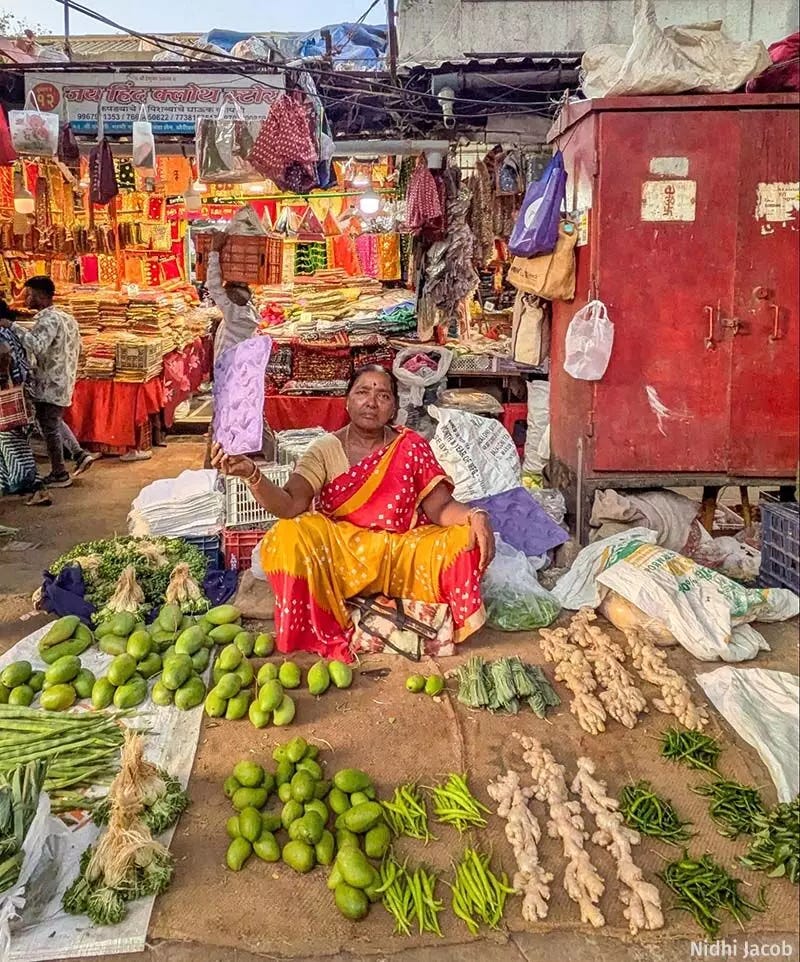
Another study, conducted by Heat Watch and Tata Institute of Social Sciences, surveyed 115 garment workers in Tamil Nadu and Delhi, and found that in the last 12 months, 87% workers reported facing heat-related issues such as headaches, dizziness, weakness and muscle cramps.
Nearly two in five workers reported that the toilets are often unclean, 73% reported they do not have running water, 78.3% workers reported that it is difficult to get permission to use the toilets. Women are particularly affected, with a vast majority reporting urinary tract and menstrual health issues.
To mitigate these impacts, experts are calling for urgent reforms, including the classification of heat-related illnesses under the Employees’ State Insurance Act, the implementation of parametric insurance for informal workers, and the deployment of industrial hygienists to enforce workplace temperature standards. Tanvi Deshpande reports.
What’s Ailing India’s Green Credits
India’s Green Credit Programme, launched in 2023 as a market-based climate solution, has been positioned as a tool to incentivise environmental action. However, internal documents suggest it is coming at the cost of local lives and livelihoods. In Assam, plantations have been carried out on lands from which villagers were evicted, while in Gujarat, land claimed by tribal communities has been fenced off, raising concerns over rights and access.
While the scheme hoped to enrol individuals and private sector industries, until now, it has attracted investments from only state-run oil, coal and power companies. Seventeen public sector units—including, Indian Oil Corporation and other petrochemical corporations, Coal India Limited and its subsidiaries, National Thermal Power Plant Corporation—have bought green credits.
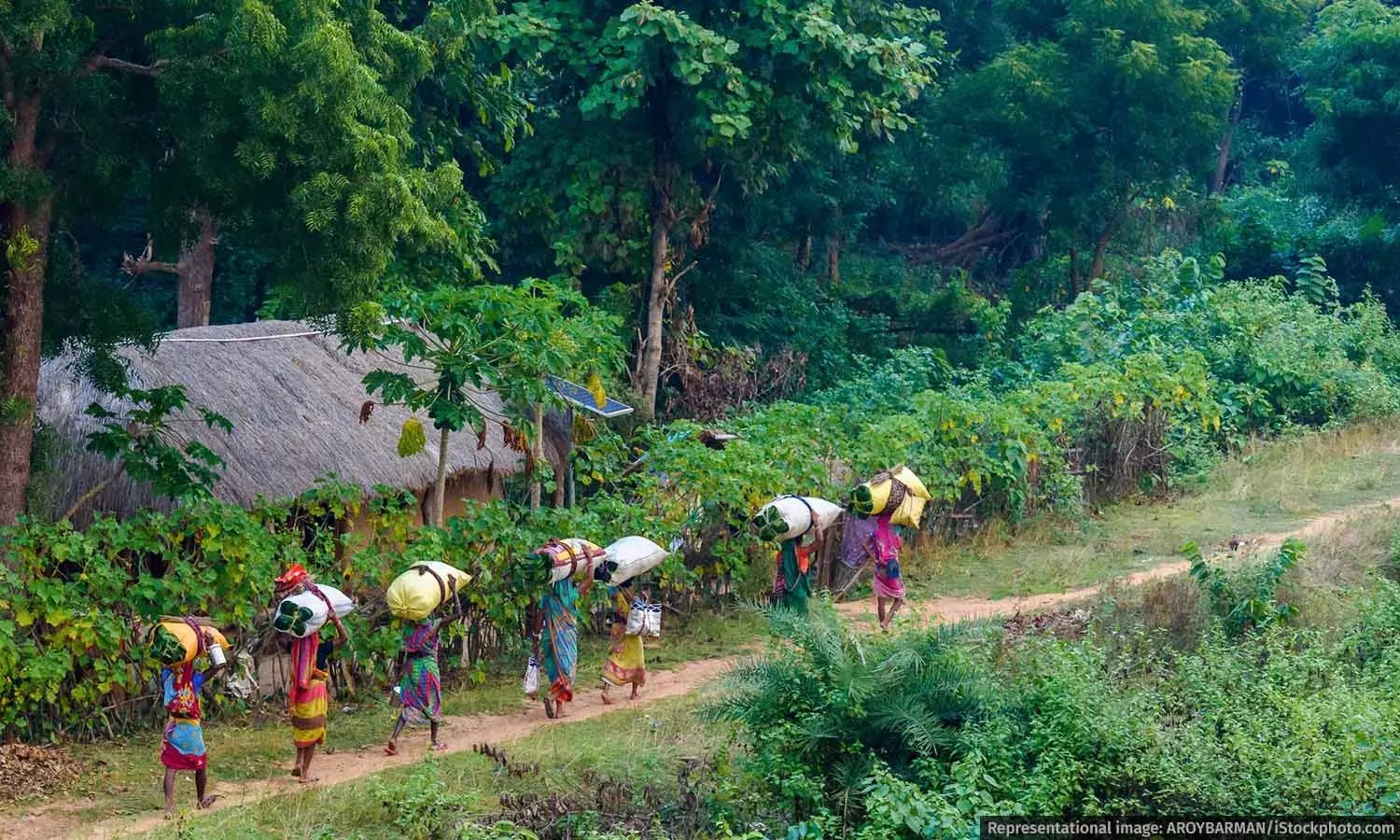
Since its launch, eco-restoration has begun in 225 sites across 12 states covering about 48 square kilometre of “degraded land”, government data show.
Documents obtained under the Right to Information Act—inspection reports for 169 sites across 10 states spread over 35 sq km involving Rs 117 crore worth of green credits—highlight implementation gaps, including a “mismatch” between species listed in cost estimates and those actually raised in nurseries. Several identified sites were also found to have dense canopy cover, unsuitable for plantations, and involved activities adjacent to approved areas.
Experts argue that, as a potential replacement for compensatory afforestation (CA), which mandates companies to offset forest diversion by bringing non-forest land under plantation, the GCP departs from its original intent by promoting plantations on “degraded” forest land. It also lacks safeguards to ensure that such forest parcels, many of which are used by tribal and forest-dwelling communities, are not taken up for plantations before their rights are recognised under the Forest Rights Act. Sukriti Vats reports.
That’s all for this week. Until then, stay hydrated.