

Ageing In India Is Not Easy
Home-based care is scant, insurance does not cover palliative care adequately, and care homes are nowhere near sufficient.

Dear Reader
Do you remember the last time you visited an elderly relative who lives alone? The quiet of the house. The slightly too-careful way they move around furniture they’ve known for decades. There’s a particular kind of loneliness that comes with old age in India—and increasingly, a particular kind of vulnerability.
India is ageing fast. The population aged 60 and above is projected to more than double from 100 million in 2011 to 230 million by 2036. By 2050, there will be more elderly than children in this country. This week, we published a two-part series examining what that means in practice—and the answer is not reassuring.
The Home That Isn’t There
Sixty-five-year-old Elina Ghosh lives alone in Delhi. Her husband died three years ago. Her daughter lives abroad. She was recently diagnosed with Parkinson’s disease. She has found a home-based caregiver—for now. But she worries about what happens as the disease progresses. Her aunt in Jabalpur, paralysed after a stroke, has struggled to find trained, reliable help at all.
Ghosh’s situation is not unusual. It is, increasingly, the norm.
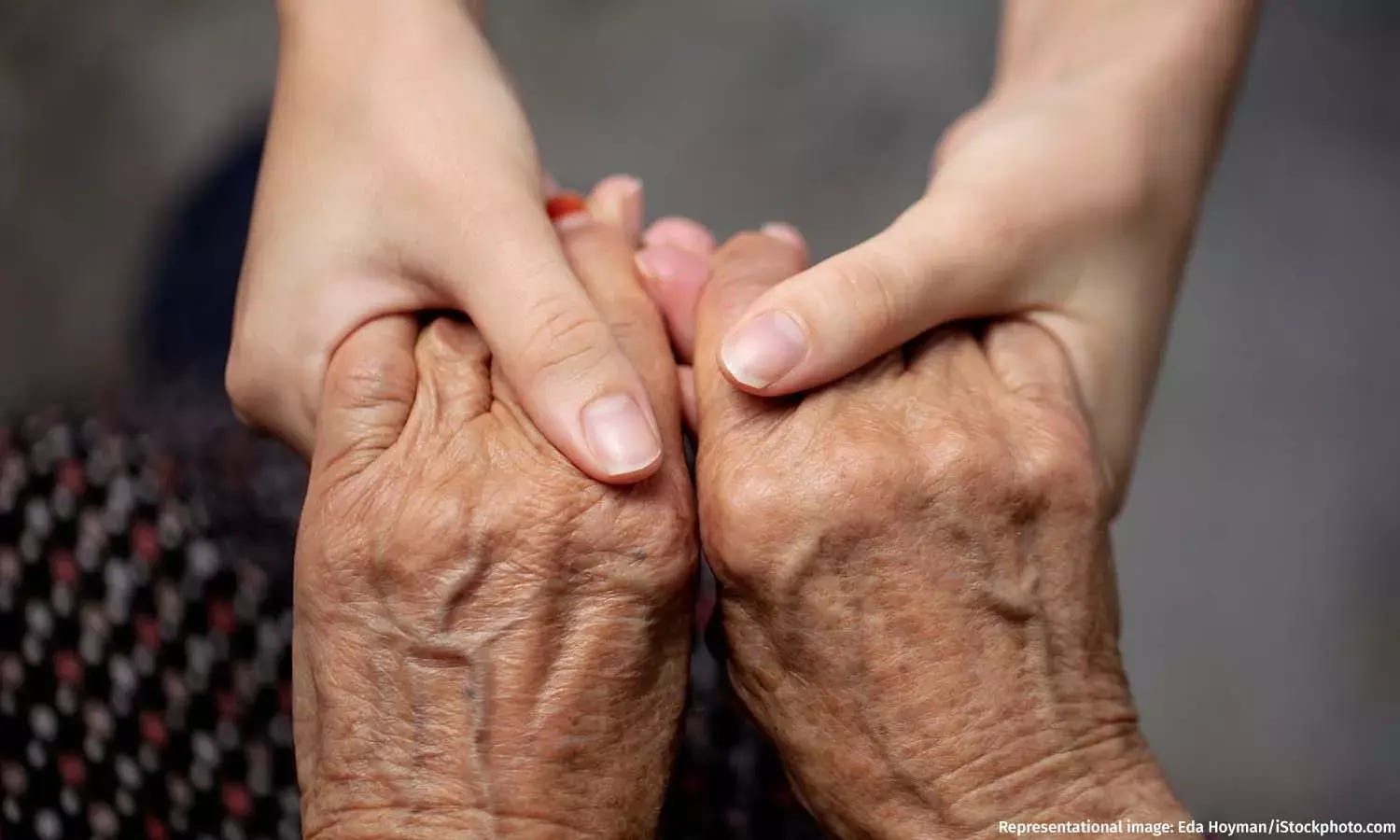
The government supports 696 senior citizen homes across the country. There are no reliable figures for private facilities—the government doesn’t track them. A study by Tata Trusts, Samarth and UNFPA estimated that existing facilities can house around 97,000 elderly residents. That number needs to grow eight to ten times over the next decade. Many homes that do exist are unregistered and unregulated.
Home-based care—the kind Ghosh relies on—is in even worse shape. It is unregulated, unstandardised and, as geriatric specialist Antarikhya Bordoloi told Azera Parveen Rahman, “either not well trained or well managed.” The primary objective of many caregiver service providers, she said, is simply to earn money from families who live far away and have no alternative.
Seventy percent of India’s elderly population live in rural areas. The silver economy—goods and services aimed at the elderly—is valued at Rs 73,000 crore. Almost none of it reaches them. Read Azera’s story here.
When Home Care Doesn’t Come
The second part of our series, by Ayman Khan, picks up where the first leaves off: What happens when no care reaches home at all.
India’s national policy for palliative care is designed to keep the chronically ill and elderly out of hospitals, with trained primary healthcare workers making home visits for symptom management and basic nursing. In practice, the numbers tell a different story.
When home care doesn’t come, families turn to hospitals. It is not because patients need hospital care—it is, as Shanmugapriya P. of Pallium India Trust says, because “families have no alternative.”
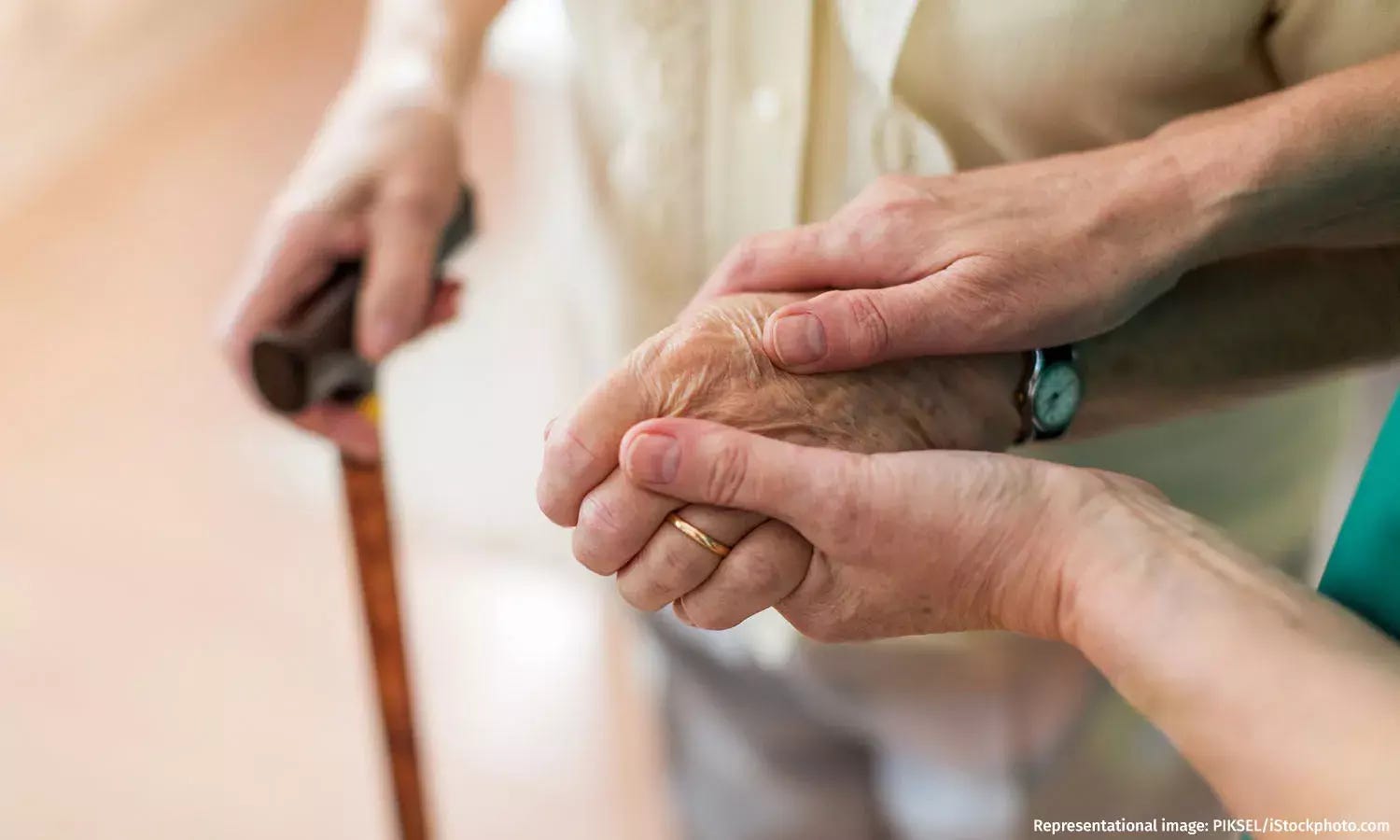
The burden falls on families. Specifically, it falls on women. Caregiving frequently requires women to reduce paid work hours or leave the workforce altogether. The costs are invisible in official data—lost income, repeated hospital travel, accommodation near health facilities—but very real for the households that carry them.
“Families don’t just need medicines or physiotherapy,” said public health researcher Parth Sharma of ASAR. “They need support for mental health, nutrition, schooling and livelihoods.”
Ayushman Bharat covers inpatient care but offers minimal coverage for palliative or home-based services. Insurance is nominally available but “poorly defined and inadequately packaged,” as palliative medicine specialist Anuja Damani put it. There is, she said, “a significant gap between policy intent and real financial protection.”
Kerala offers a model: community networks of volunteers—shopkeepers, teachers, students—trained to provide medical and emotional support to seriously ill people at home. But Kerala’s network took decades to build, supported by high literacy, strong local governance, and civil society. It is not easily replicated.
“If all healthcare continues to be delivered from hospitals,” said Sharma, “a major proportion of the elderly will remain without access to care.” Read Ayman’s story here.
That’s all for this week. Have a good weekend!