

Beyond Delhi’s Smog
How northeast India is turning into a pollution hotspot, and how India counts its tigers

Dear Reader
It is now a little over 10 years ago that we started our deep-dive reporting into India’s air pollution crisis, aided by IndiaSpend’s #Breathe network of low-cost monitors.
The learnings were simple: Air pollution is a year-round problem; it is not limited to metros and north Indian cities; few cities meet India’s already lax limits for particulate matter concentrations; mornings are more polluted than you think.
Yet, every winter, Delhi’s air pollution continues to make headlines. The AQI crosses 400, schools close, construction stops, cars get restricted.
This week, we’re looking at a pollution story that doesn’t make the news cycle: India’s Northeast. Assam’s cities now have PM 10 levels as bad as Delhi’s. Byrnihat, an industrial town on the Assam-Meghalaya border, was ranked among the world’s most polluted places in 2024. Tripura and Meghalaya exceed national air quality standards nearly year-round.
The solutions are well-known: Experts have consistently called for better monitoring and widespread source apportionment to understand and quantify the crisis. The next step involves long-term moves such as better enforcement of emissions norms, and support for cleaner tech including EVs. But implementation lags behind.
Elsewhere, we bring you a different kind of environmental story—how India counts its tigers.
When Clean Air Isn’t a Given
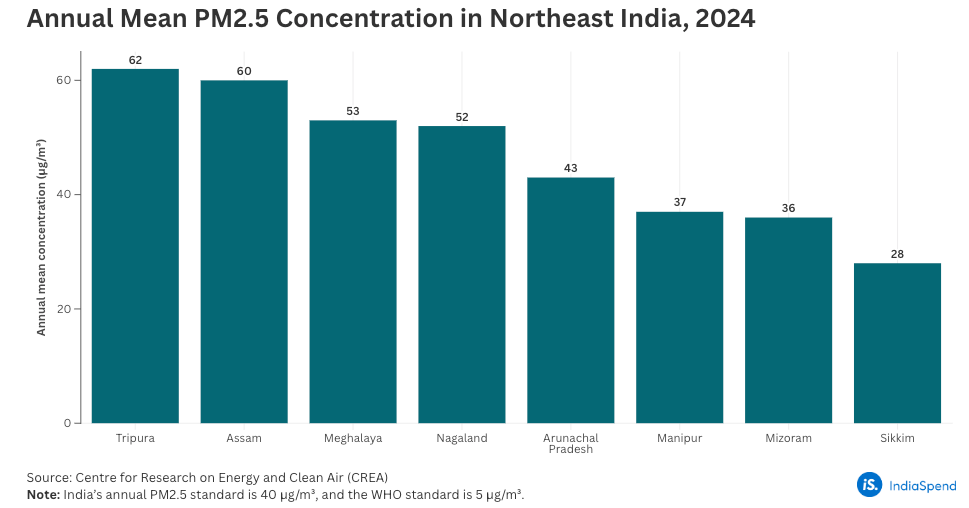
A 2024 satellite-based assessment found that in Tripura and Meghalaya, every district exceeded national standards for PM 2.5 except during monsoon months. In Nagaland, 11 of 12 districts exceeded limits. Assam contributed 11 districts to India’s 50 most polluted—the same number as Delhi. Guwahati’s PM 10 levels hit 205.4 µg/m3 in 2019—double what they were in 2013.
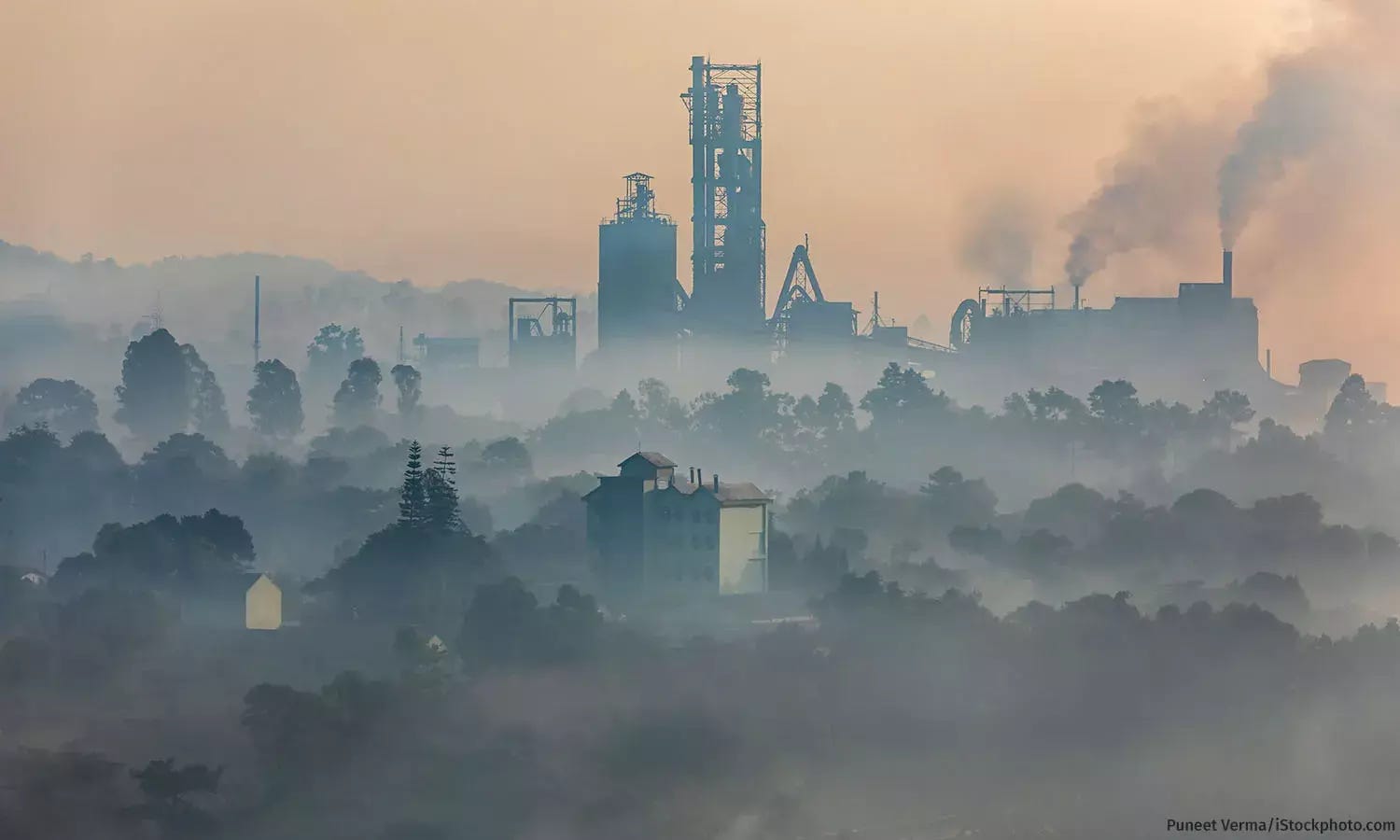
The sources aren’t mysterious. Construction dust, road dust, vehicular emissions, hill cutting, commercial cooking, open waste burning—the same culprits as in most Indian cities. Add geography: the Brahmaputra River Valley traps emissions, worsening the problem.
“We are still calling pollution in Northeast an ‘emerging concern’ but largely because monitoring in most places started only a few years ago,” says Manoj Kumar of the Centre for Research on Energy and Clean Air. “When monitoring began, we realised many of these places show very high pollution levels.”
The data gap is real. Guwahati has just three continuous air quality monitoring stations. Silchar and Nagaon have one each. Many cities rely on manual monitoring, making real-time assessment impossible. Byrnihat’s continuous monitor became operational only last year. But even where data exist, action lags.
Kumar argues for shifting from city-based to regional or airshed-based approaches. “Pollution is transboundary. Without regional coordination, cleaner air is not possible.”
Tanvi Deshpande reports on why the Northeast’s air pollution crisis needs urgent attention—and why monitoring alone isn’t enough.
Counting Tigers
How do you count 3,167 tigers across 641,000 sq km of forest?
India’s All India Tiger Estimation happens roughly every four years. It’s a massive exercise involving forest rangers, officers, research biologists, technical assistants, interns, and volunteers walking through potential tiger habitats looking for signs: pugmarks, scat, scratch marks, prey presence.
The process unfolds in two stages. First, extensive ground surveys record tiger presence, prey availability, habitat quality, and human disturbance. Then, in selected areas, camera traps capture individual tigers, which are identified by unique stripe patterns and analyzed through statistical models.
Viv Sharma, a volunteer at Madhya Pradesh’s Bandhavgarh National Park, recorded his experience during the exercise. What does one look for? How do you recognise different signs? What to do if you encounter a wild animal?
Watch our video on how India’s tigers are counted—and what it takes to be part of this nationwide conservation effort.
We’re tracking the Union budget this weekend. Watch our social media handles (and those of our friends at The Core) for updates. We’ll be back next Saturday in your inbox with insights.