

Coverage Is Not Care
This week, why rising health insurance cover hasn’t reduced medical bills, and what India’s migration data reveal about who moves and how far

Dear Reader
India has nearly tripled health insurance coverage over the past seven years. Sixty percent of households now have at least one person covered under some form of health insurance. Yet, the average household spends more out of pocket on medical care than before.
This is because insurance in India is built almost entirely around hospitalisation, and usually does not cover outpatient care, medicines, or the transport and lodging costs that mount when a family must travel for treatment.
For the millions managing chronic disease—diabetes, kidney failure, cancer—who require continuous care between hospital stays, insurance changes little. Nearly half of India’s health expenditure is still borne directly by families, up from 45.1% the previous year. Among BRICS members, only Egypt has a higher share of out-of-pocket expenditure than India.
Elsewhere, we explore what government data show about who migrates for informal work, how far they travel, and why.
Why health insurance isn’t cutting India’s medical bills
Even the poorest Indian households spend an average of Rs 25,000 per hospitalisation—an amount that can exceed a family’s monthly income and push them into debt, asset sales, or reduced spending on food and education. Nearly three in five rural hospitalisations happen in private hospitals, where average costs can reach Rs 55,000 per stay, against about Rs 6,900 in government hospitals.
“Publicly funded insurance schemes are largely targeted at below-poverty-line populations. When they go to hospitals, they are told certain treatments or medicines are excluded, and they end up paying from their own pockets,” says Ravi Duggal, a Mumbai-based public health researcher.
PMJAY, the government’s flagship scheme, has authorised nearly 109 million hospital admissions since 2018. But “the scheme encourages people to seek care in the private sector, where costs are much higher. Care that is supposed to be “cashless” often ends up involving substantial out-of-pocket payments,” says Indranil Mukhopadhyay of the Jindal School of Government and Public Policy.
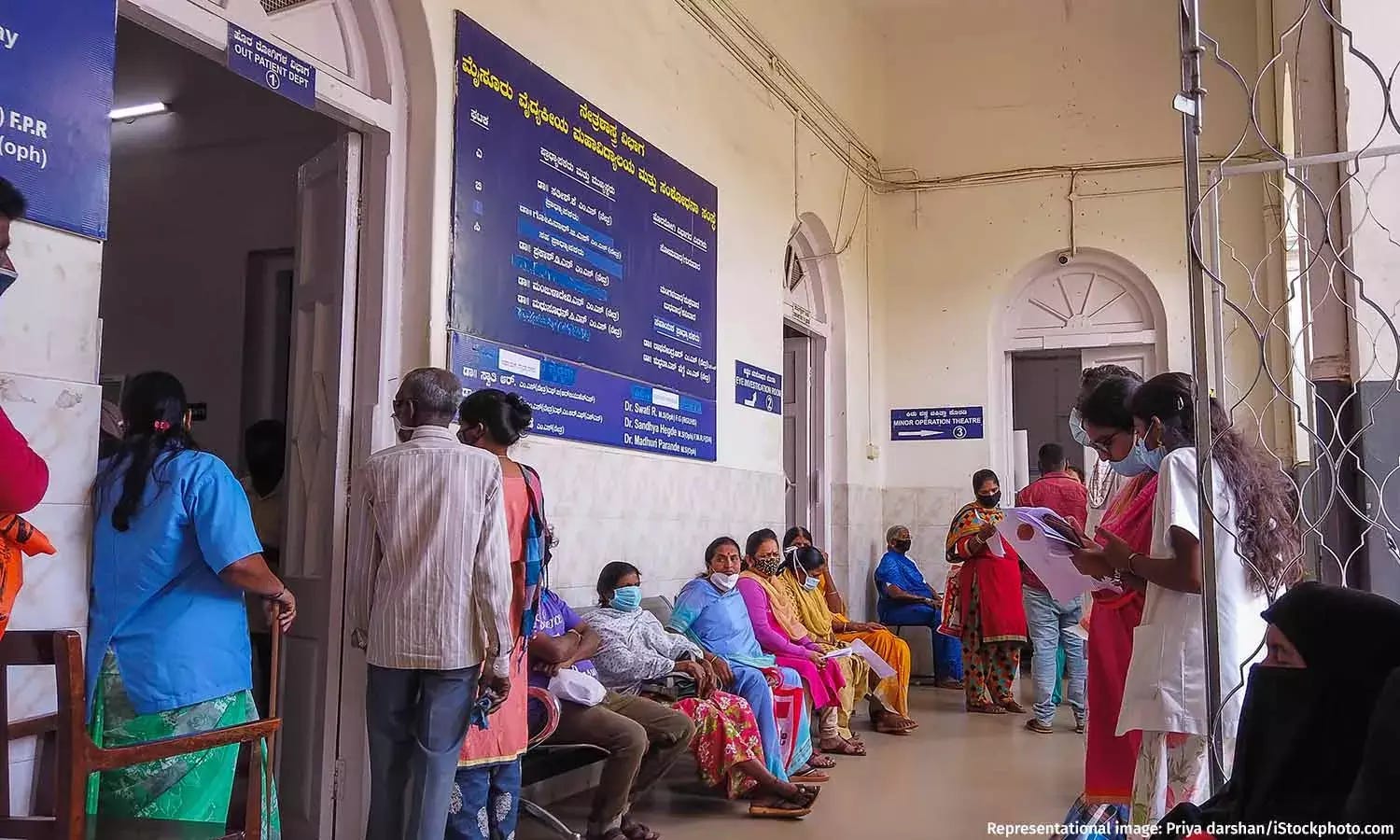
In rural India, kidney failure is the costliest ailment, averaging Rs 1.2 lakh per hospitalisation in private hospitals. Cancer follows at Rs 87,339. In urban areas, cancer overtakes all else at Rs 1.47 lakh in private hospitals—against Rs 21,802 in public facilities.
Non-medical costs compound the problem. Transport, lodging for attendants, and food can be a sustained drain for families managing long-term illness. “Unlike hospitalisation, which may be a one-time event occurring once every few years, chronic illnesses require continuous spending on daily medicines, regular doctor consultations, and periodic tests,” says Mukhopadhyay.
‘Among Informal Workers, The Less Educated Travel The Farthest’
India’s migrant workers are an amorphous group, scattered across several states, moving for a variety of push and pull factors. To understand the profile of the average migrant, researchers at Azim Premji University looked at the eShram portal, a government registry of over 300 million unorganised sector workers.
I spoke with Tamoghna Halder, a co-author of the State of Working India 2026 report, to understand their findings. Halder teaches economics at the University and has a PhD from the University of California, Davis.
Informal workers are increasingly young and have relatively higher levels of education, reflecting a direct consequence of two decades of expanding educational enrolment across India, Halder told me.
But education shapes how far they travel. Less educated workers from eastern states travel the farthest, dominating destination districts across large parts of the country. More educated informal migrants stay closer to home, likely treating informal work as transitional while searching for formal opportunities nearby.
Halder identified three distinct migration channels: distress-driven dispersal from Uttar Pradesh and Bihar; a combination of economic pressure and historically rooted corridors for migrants from Jharkhand and West Bengal; and spatial containment near Assam and Madhya Pradesh, despite similar poverty levels.
Underlying all of it is a demographic rebalancing. Ageing, richer states are absorbing surplus labour from younger, poorer ones.
Read the full interview here.
That’s all for this week. We’ll be back next week with more stories.