

Do Indians Exercise Enough?
This week, who exercises and when, and why India needs to reuse construction waste

Dear Reader
It’s late January—that point where New Year’s resolutions start to fade. Gym memberships bought with good intentions go unused, morning walks get postponed, fitness apps gather digital dust.
But for most Indians, the question isn’t whether they’ll stick to their resolutions. It’s whether they had the time, money, or energy to make them in the first place.
And this has larger implications. India is going through a disease transition—where even as infectious diseases continue to take a toll, lifestyle diseases are now among the deadliest.
In recent months, we’ve written about the country’s nutrition security and the factors that affect who eats what. Today, we look at who exercises and when. This is the result of extensive data analysis: My colleague Vijay Jadhav parsed 23 million rows of data across three government surveys conducted decades apart. And the results are sobering.
9 in 10 Indians Don’t Exercise
Only 1 in 10 Indians exercised on a given day in 2024. That number has barely budged since 1998, when 8% reported exercising. The data underneath reveal something more troubling: exercise in India follows familiar lines of gender, wealth and caste location.
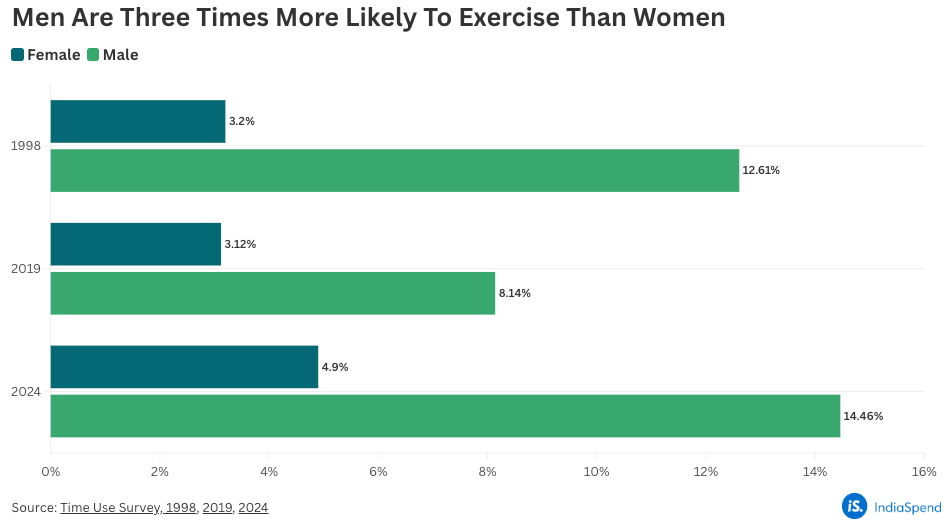
Men were nearly three times more likely to exercise than women—14.5% versus 4.9%. The burden of unpaid domestic and care work falls disproportionately on women, leaving little time or energy for exercise. Many believe household chores count as exercise—fitness experts say they don’t.
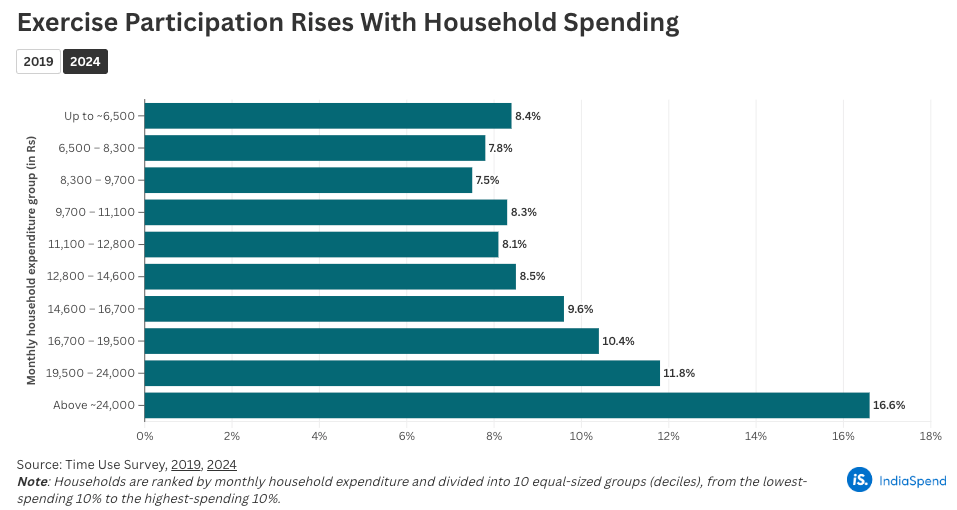
Urban residents exercised twice as much as rural ones—14% versus 7%. Exercise rises with education and household spending. It varies by caste: 13.3% in the “others” category versus 6.9% among Scheduled Tribes.
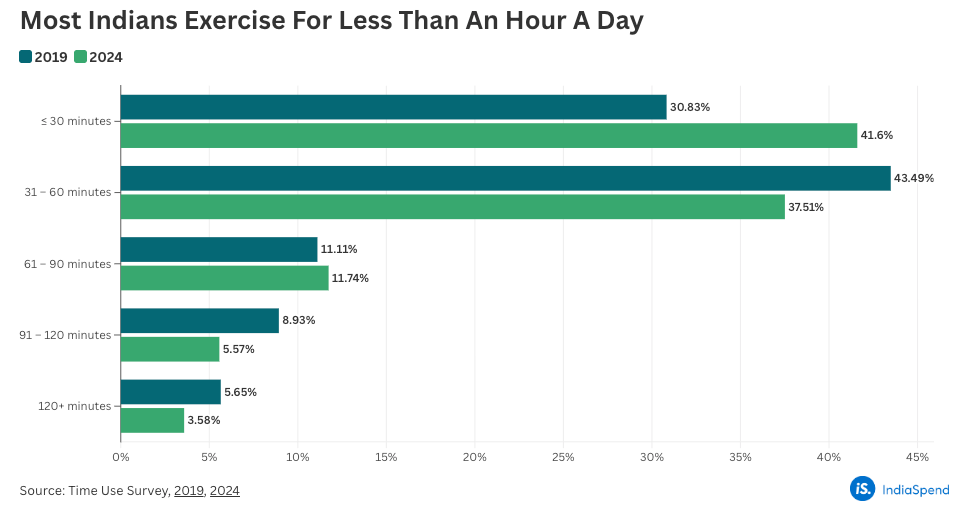
Among those who did exercise, most did so briefly. About 42% exercised for 30 minutes or less, another 38% for 30-60 minutes. Only 10% of adults, 20% seniors, and 1.7% children met the WHO’s daily activity recommendations.
Sports participation is even lower—less than 1% of Indians played a sport on the reference day, with more than 80% of participants below age 20. Once people leave school, organised sports largely disappear from their lives.
The health implications are serious. Physical inactivity contributes to cardiovascular disease, diabetes, obesity, and mental health conditions. Globally, insufficient activity could cause 500 million preventable diseases by 2030, with treatment costs exceeding $300 billion, WHO warns.
Last Independence Day, Prime Minister Narendra Modi cautioned that “obesity is becoming a very grave crisis” and cited experts saying “in the coming years, one in every three people will suffer from obesity.”
Our analysis breaks down who exercises, who doesn’t, and what structural barriers—not personal motivation—explain the gaps. Read Vijay’s analysis here.
Burying What We Could Build With
Elsewhere this week: India generates 150 million tonnes of construction and demolition (C&D) waste annually and recycles just 1%. The rest gets dumped illegally—polluting rivers, burying land, wasting reusable materials even as the construction industry strips half the country’s natural resources.
Consider this: Building a 1,000-sq-ft home generates, on average, 3 tonnes of construction waste. Razing the same structure generates 30 tonnes.
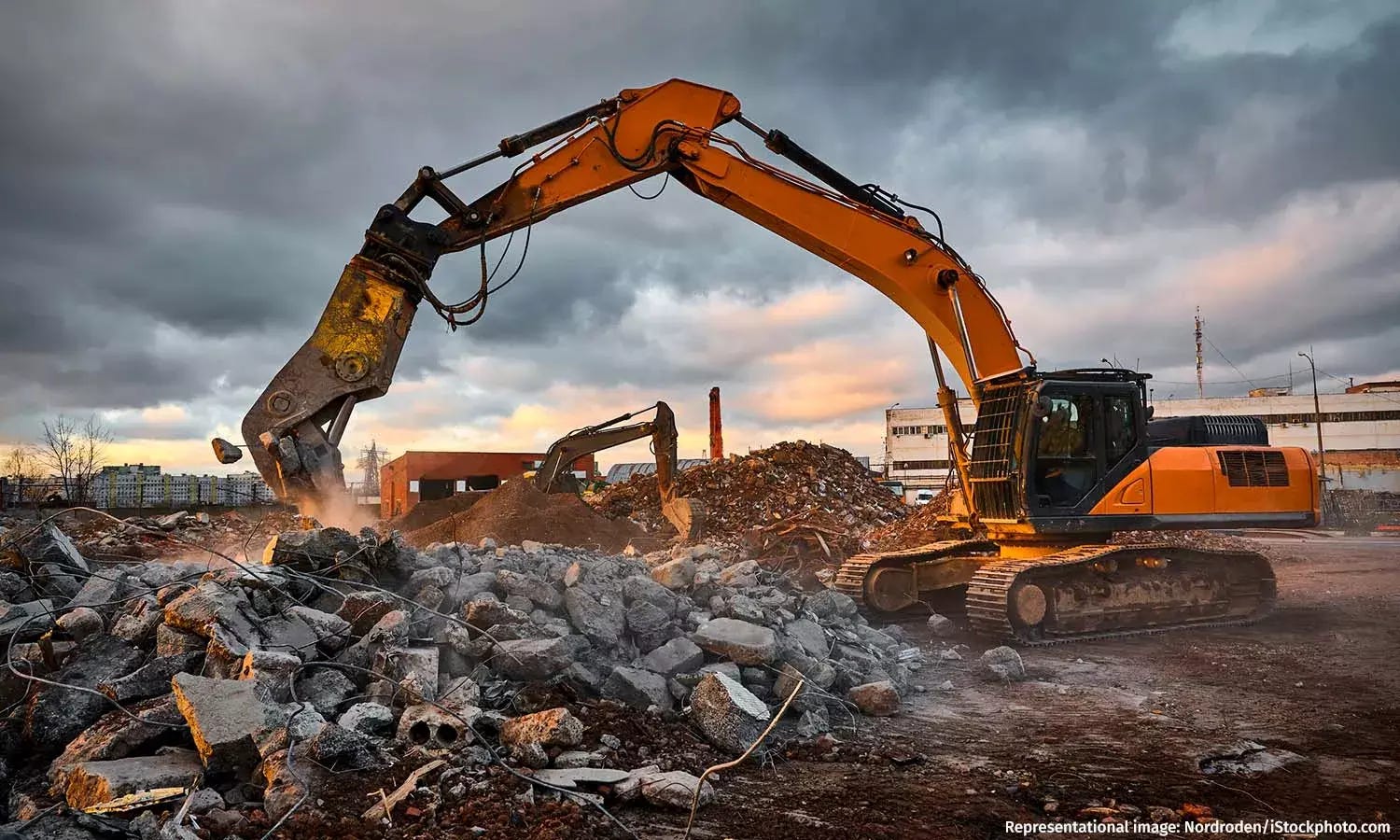
The aggregates obtained after processing can be used instead of sand and gravel—though for non-structural applications at present, like manufacture of paver blocks and kerbstones—by the construction industry.
This in turn helps us conserve the scarce resources of virgin sand and gravel, reduces carbon emission by 40%, besides reducing raw material cost. Though rules mandate the use of C&D waste in certain works, India needs more processing plants to better utilise the resource. Jency Samuel reports.
Have a good weekend.