

Indian Women’s Long Walk to Parliament
This week, an analysis of women's representation at various levels of government, and how urban failures are increasing inequalities

Dear Reader
I am writing from sweltering Kuala Lumpur, Malaysia, where 30 journalists from across South and Southeast Asia convened for a workshop on heat and its impact on human health.
As my colleague Tanvi Deshpande reported last week, extreme heat particularly affects the most marginalised groups and communities. Construction workers and farmers are acutely impacted, as are street vendors, factory workers, gig and platform workers, and home-based workers.
For many of them, missing even a few hours of work means lost incomes in the face of increasing expenditure and, with the onset of the summer vacation, more caregiving duties, especially for women who bear a disproportionate burden.
And this is just the beginning. All predictions show that several parts of India are set to see high temperatures, more heatwave days and normal to below normal rainfall this monsoon. Over the next few weeks, we will continue to tell the stories of how vulnerable populations are coping with extreme heat.
Meanwhile, we saw a heated parliamentary debate on an amendment to increase the number of seats in the Lok Sabha to 850. Several parties that lead state governments have opposed the move, citing a potential decrease in the proportion of seats. The motion was defeated as it failed to garner the two-thirds majority necessary for constitutional amendments.
This move was meant, the government says, to fast-track the implementation of a law to provide 33% reservation for women in the parliament and legislative assemblies. This week, we examine the current state of women’s representation at different levels of government and the barriers that women face in moving up the ranks.
Elsewhere, we look at the worsening urban crisis and how the wealthy are seeking oases in the middle of cities—gated communities, integrated townships and other exclusive enclaves. As a result, they withdraw from civic participation, leaving the rest to deal with failing city infrastructure.
From Village Councils to Parliament
More than 1.5 million women hold elected positions in Panchayati Raj Institutions, with representation exceeding 50% in many states. This is largely due to a 1992 amendment to the Constitution reserving a third of seats for women in rural and urban local bodies. In 18 states, women now occupy more than half of all PRI seats. Only the Union territories of Dadra and Nagar Haveli and Ladakh have less than 33% representation of women in these grassroots institutions.
But even in these institutions, women routinely face gender prejudice, financial constraints, discrimination and physical threat, as we reported over the years.
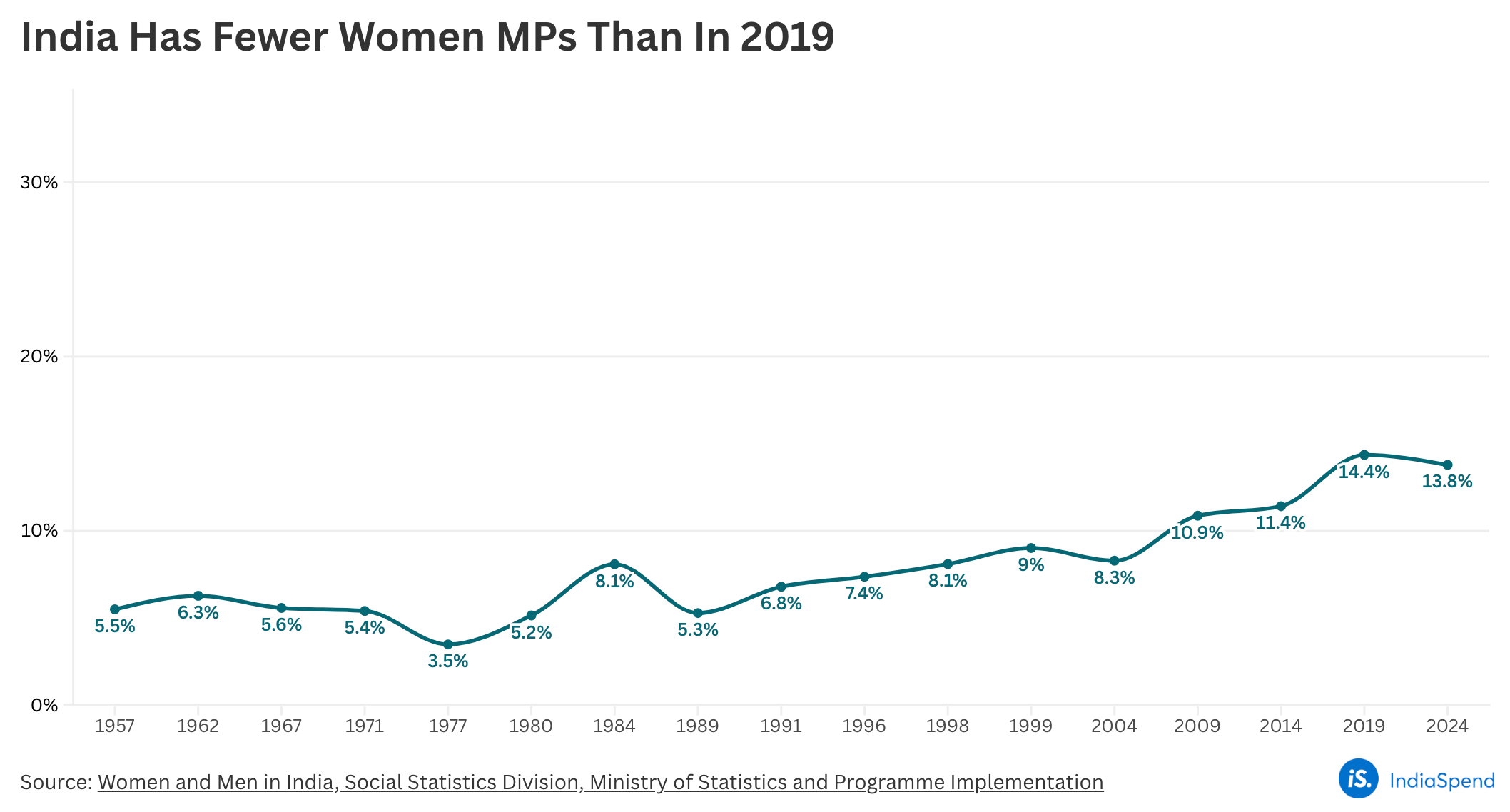
And the path up to the higher levels of government is rocky. Even states with higher representation of women in PRIs see fewer women MLAs. In Himachal Pradesh, for instance, women account for 50% of PRI representatives, but only one of 68 members in the state’s legislative assembly is a woman.
In Lok Sabha, women’s representation has increased from 22 of 489 members (5.5%) in 1957, to 75 of 544 members (13.79%) in 2024. Vijay Jadhav explains in five charts.
Inside the Gates: India’s Urban Inequality Crisis
Indian cities are crumbling. The Economic Survey for 2025-26 calls them “sites of daily strain: long commutes, uneven services and shared spaces that often fall short of collective expectations”. This state of affairs and growing aspirations are driving India’s urban affluent to gated communities to experience a more organised version of their city.
Advertisements for upcoming or exclusive communities promise landscaped open spaces, play areas, gyms, club houses, sports centres, all of which are supposed to be part of city development plans, but aren’t. Two in five households in India’s top 50 cities today opt to live in a gated complex, up from one in three households five years ago, according to a new report from Redseer Strategy Consultants on the rise of gated communities in India.
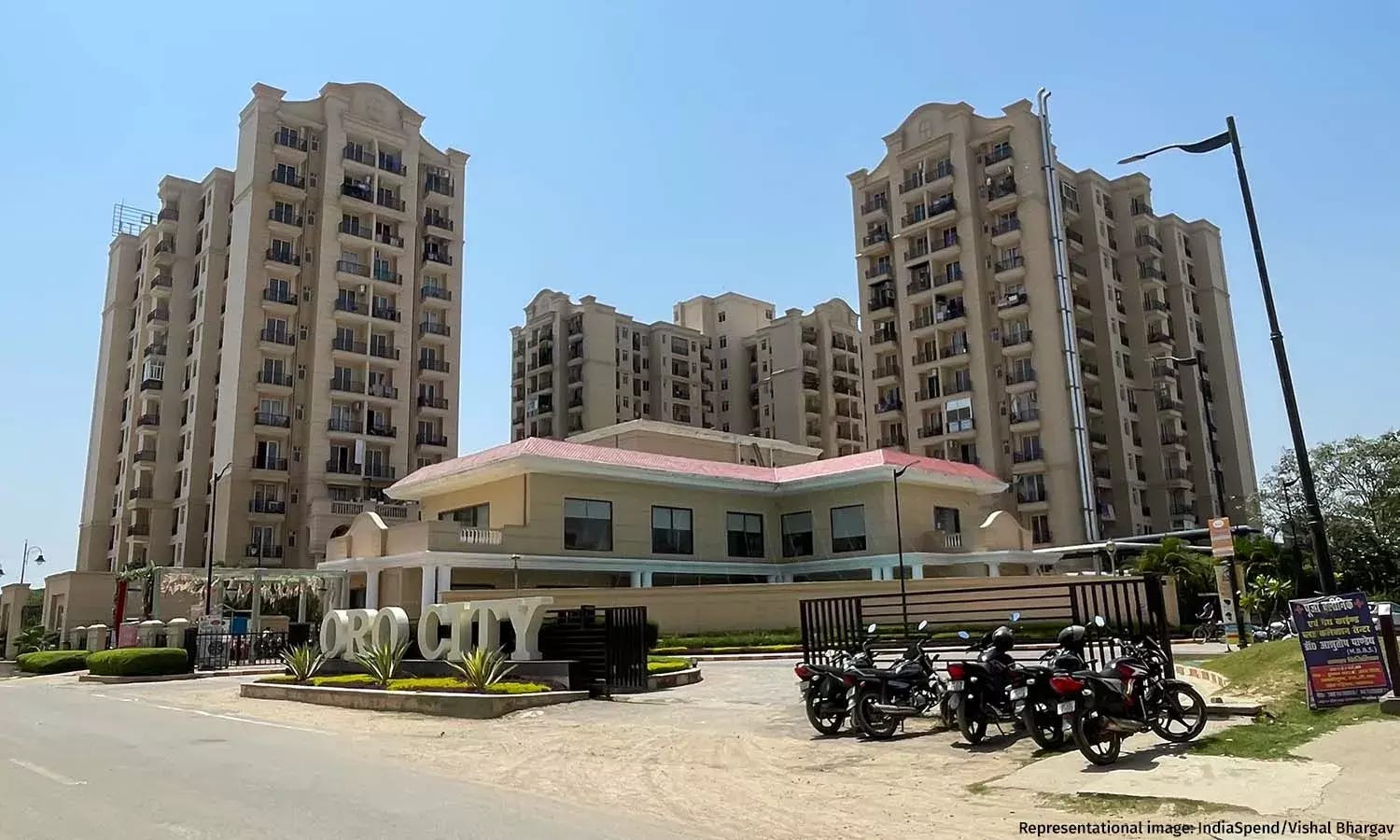
But their exit leaves urban local bodies less accountable to the less privileged who lack the means to question service delivery lapses.
“When a city’s most resourceful residents disengage, it can create conditions where the needs of the less affluent are more easily deprioritised and over time, the city’s sense of shared responsibility can quietly narrow,” said Amit Kapoor, chair, Institute for Competitiveness.
City governance reform needs the empowerment of urban local bodies to implement the functions they have been constitutionally entrusted with, higher funding for service delivery, citizen participation and greater accountability, Charu Bahri writes.
Have a good weekend.