

The Fine Print In India's Demographic Dividend
This week, the state of India's job market, and a missed deadline to eliminate TB

Dear Reader
For the first time in four decades, young Indian men are withdrawing from education. Graduate earnings are stagnating. Half of new jobs are in agriculture. And India expects its demographic dividend to peak before 2030.
A new report from Azim Premji University traces 40 years of youth employment and education data, and the picture it draws is more complicated than the headline growth numbers suggest. The economy is expanding. The jobs it’s creating aren’t what a young, educated workforce needs.
Elsewhere, a different kind of target missed: India recorded 185 TB cases per 100,000 people in 2025—more than four times its own elimination goal.
Young, Educated, Waiting
Half of the 83 million jobs added between 2022 and 2024 were in agriculture, a sector that contributes least to output and earnings, according to a new report released earlier this month. The demographic dividend India hopes to cash in before 2030 depends on a labour market that isn’t ready.

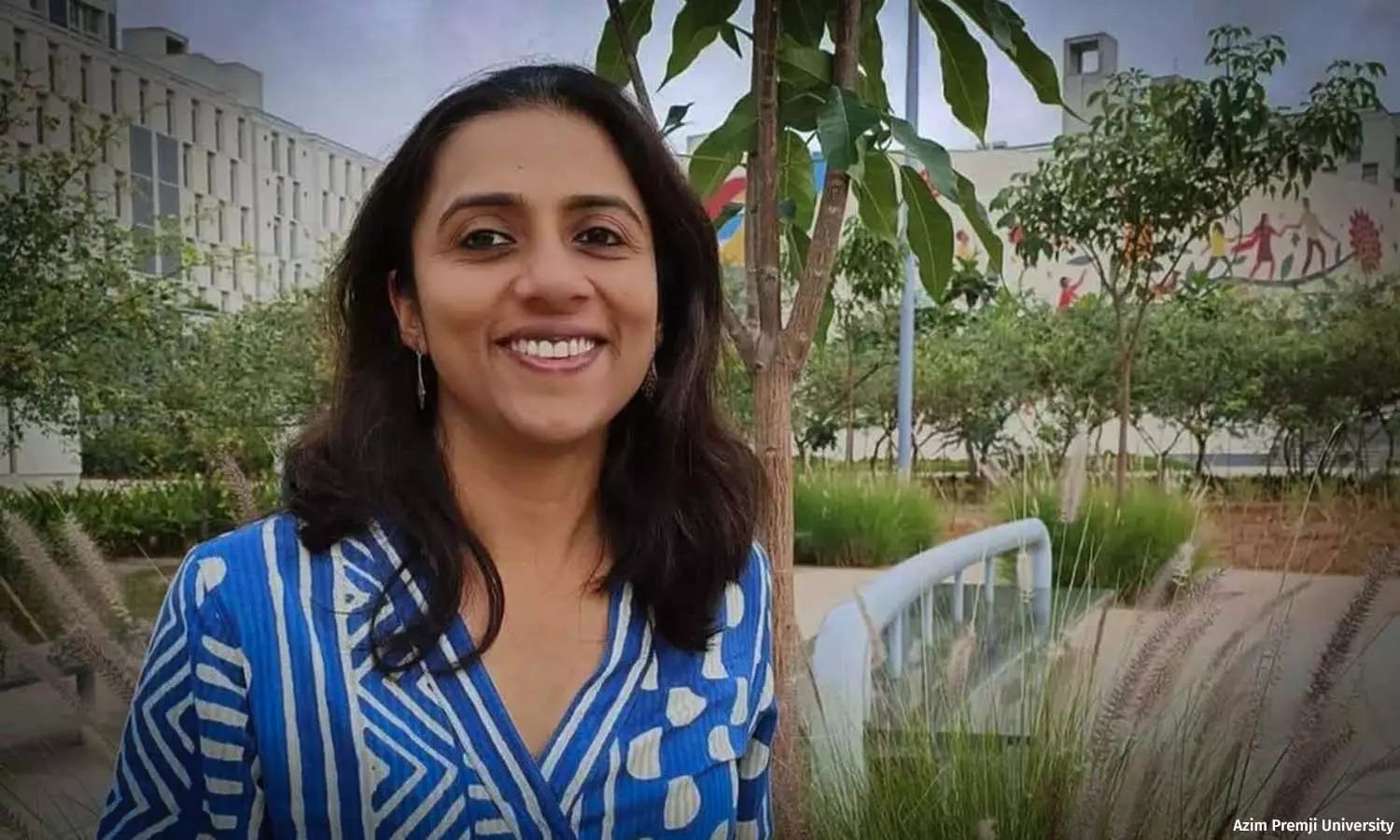
I spoke with Rosa Abraham of Azim Premji University, lead author of the State of Working India 2026 report, about what four decades of data reveal.
Abraham pointed to three surprising trends: the gender pay-gap narrowing not from a surge in women's income but from declining men's earnings; young men withdrawing from education for the first time in four decades; and a heartening shift of SC and ST workers away from traditional occupations into modern industries.
Abraham is an associate professor of economics at the University, and heads its Centre for Sustainable Employment. In this interview, she explains why earnings are stagnating, who waits longest for salaried work, and what AI might do to entry-level jobs next. Read the interview.
The Long Road To TB Elimination
When Rajendra Nayak, a driver in Odisha, developed a persistent cough and started losing weight, he did what most patients do—he went to a health facility. Three tests came back negative for tuberculosis (TB). Those around him assumed his drinking was to blame. He was ready to give up on seeking care.
It took a community volunteer and one more test—a molecular one this time—to find the TB that sputum microscopy had missed. Nayak's experience is not an exception. Experts say half of all patient losses in India's TB care system happen at this very first step.
India’s TB elimination target for 2025 was 44 cases per 100,000 population. But that year, India had 185 cases per 100,000, more than four times the target.
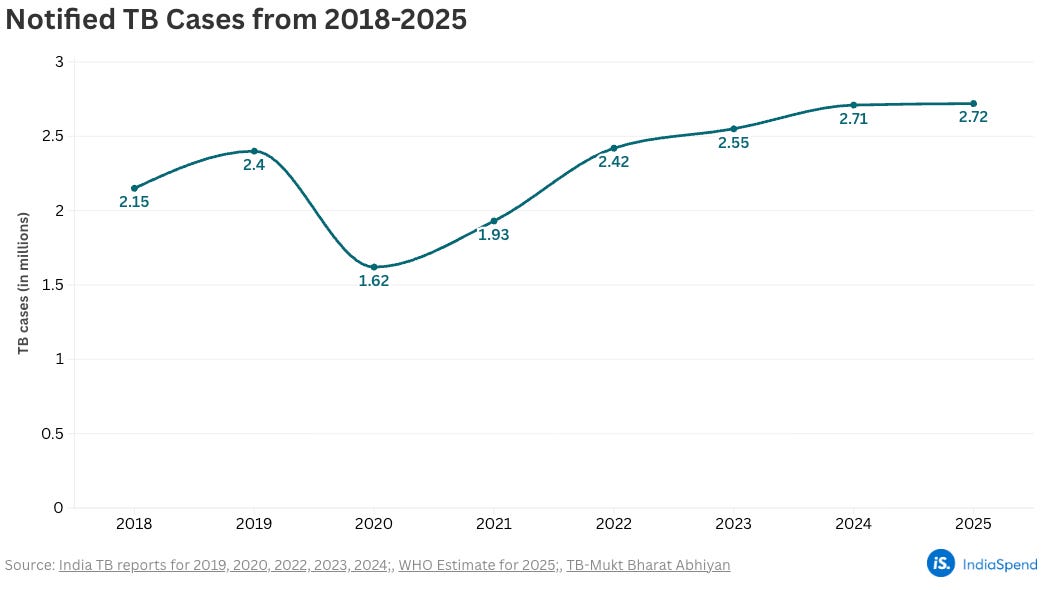
Increased notifications are not necessarily a result of higher incidence, but could be attributed to India’s active casefinding. The problem lies in the gap between intent and execution.
Smear microscopy, which misses half of all TB cases, accounted for three in four tests in 2023, the latest year for which such data are available. Molecular testing remains unevenly available. Experts describe a testing pathway "designed for leakages"—patients referred across multiple facilities, returning for results, referred again.
Further, nearly 40-50% of microbiologically confirmed TB cases show no typical symptoms, meaning symptom-based screening alone cannot find them.
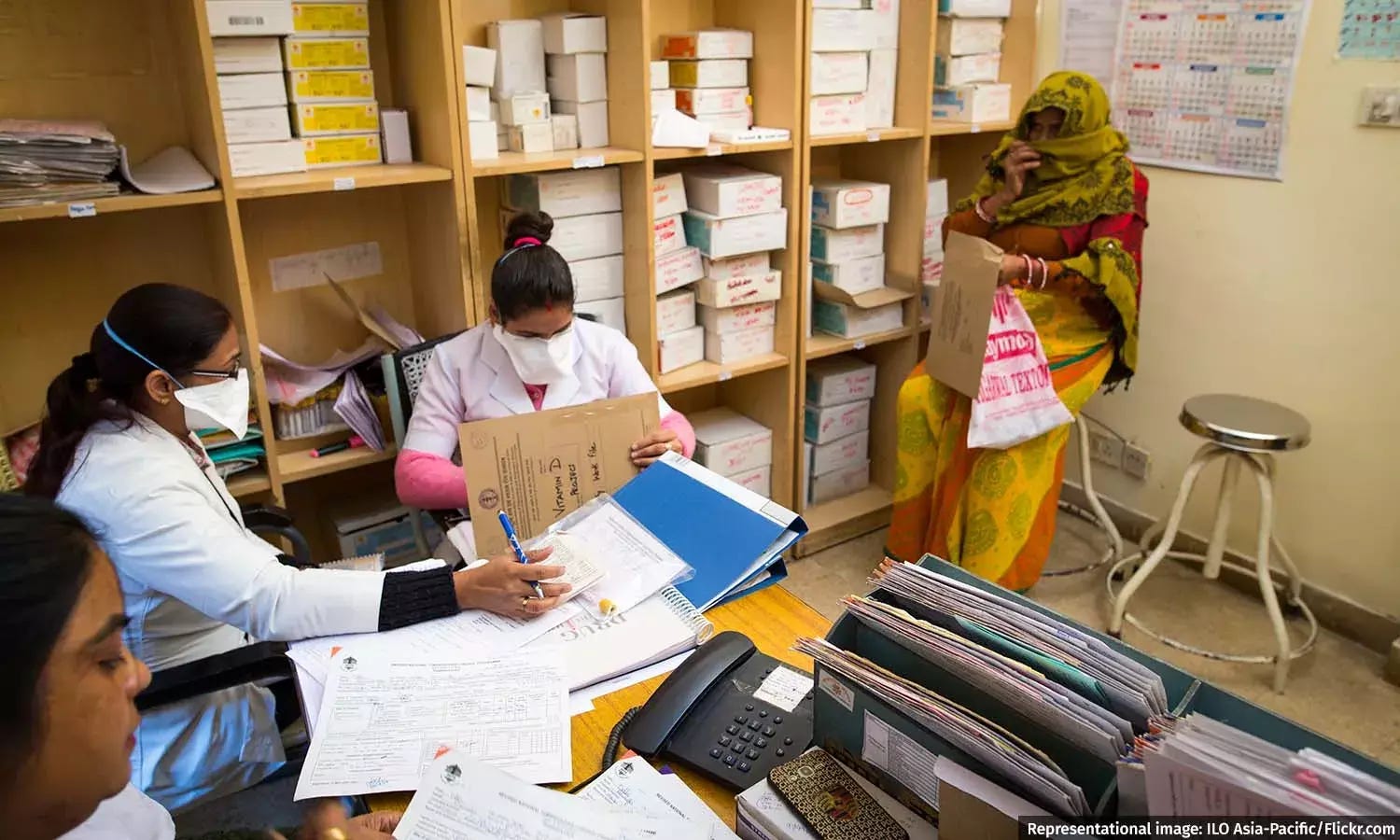
Clinicians and researchers say the answer lies in reaching patients earlier, through active community screening. The government’s updated strategy says this too. The distance between strategy and practice is where patients disappear. Prachi Salve takes stock.
That’s all for this week. Have a good weekend!