

'The Work Had Just Begun'
This week, the consequences of the new transgender protection law amendment, and how Indian families spend on school education

Dear Reader
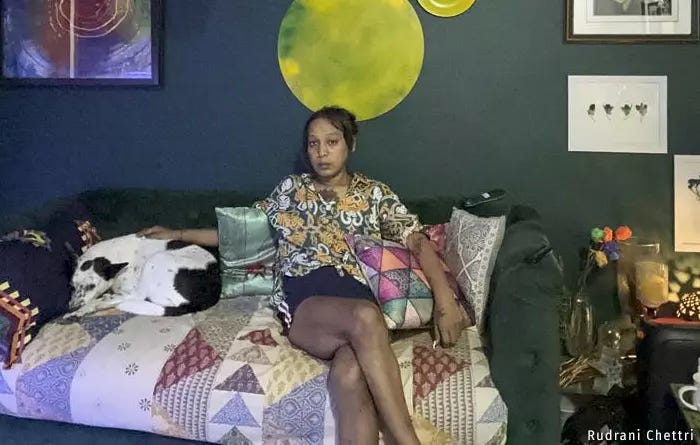
Meet Rudrani Chhetri, a transgender woman and project director of the Garima Greh (shelter home) in Delhi run by Mitr Trust. We have been following Chhetri’s work for years now.
In 2023, she recounted how her friend Rupali, who needed dialysis, could not get blood from anyone from her community because of a HIV/AIDS-era blood donation ban. Rupali died in 2017.
The following year, she spoke about the difficulties the shelter home faces: delayed funds, borrowed credit, staff working without salaries, and—in one instance—police harassment: In July 2022, the police took a transgender man housed at the shelter home with them at the request of his family. When other residents went to the police station to enquire, they were assaulted by the police, she had told us.
Even before a new amendment to the transgender protection law, there were significant gaps in implementation, and a lack of awareness about rights. “Although there are chapters addressing discrimination, denial of education, and healthcare, there is no recourse for individuals when these rights are violated,” Chhetri had told us. But now, self-identification and support are both at risk, as we explained this week.
Elsewhere, as schools begin to shut for the annual summer vacation, we look at the patterns on spending on school education.
From Rights to Red Tape
The Transgender Persons (Protection of Rights) Amendment Act, passed in March, has left shelter homes like Chhetri’s in an information black hole. Residents who had started to settle are quietly leaving. “We are stuck in uncertainty,” she told us.
For instance, the Ayushman Bharat transgender health plan—which had promised Rs 5 lakh in health insurance for surgeries and hormone therapy—had not even completed hospital empanelments when the law changed the definition of who qualifies. “You made the plan yourself, after understanding the definition of gender,” Chhetri says. “Now you’re saying that whatever you had learned was wrong.”
The amendment does several things at once: It removes trans-man, trans-woman and gender-queer from the legal definition—retroactively, as if they were never included.
It makes legal recognition contingent on a medical board’s recommendation followed by district magistrate approval, replacing the right to self-identification that the Supreme Court affirmed in 2014.
It introduces provisions criminalising anyone who “compels” a person to adopt a transgender identity—a clause that guru mas in traditional trans households now fear could be used against them for sheltering young people who come to them.
The rationale for the amendment, the government said, was the misuse of benefits meant for transgender persons. But even before this amendment was enacted, getting an ID card was difficult. Only 33,000 identity cards have been issued so far—7% of the estimated population. Between 2021 and 2024, just 11% of allocated welfare funds were spent.
“How can the government or a medical board affirm or reject my identity?” Ayaan, 24, a transman, asks.
Divya Tiwari reports on what the change means for community members, shelter homes and healthcare providers.
The Cost of Schooling
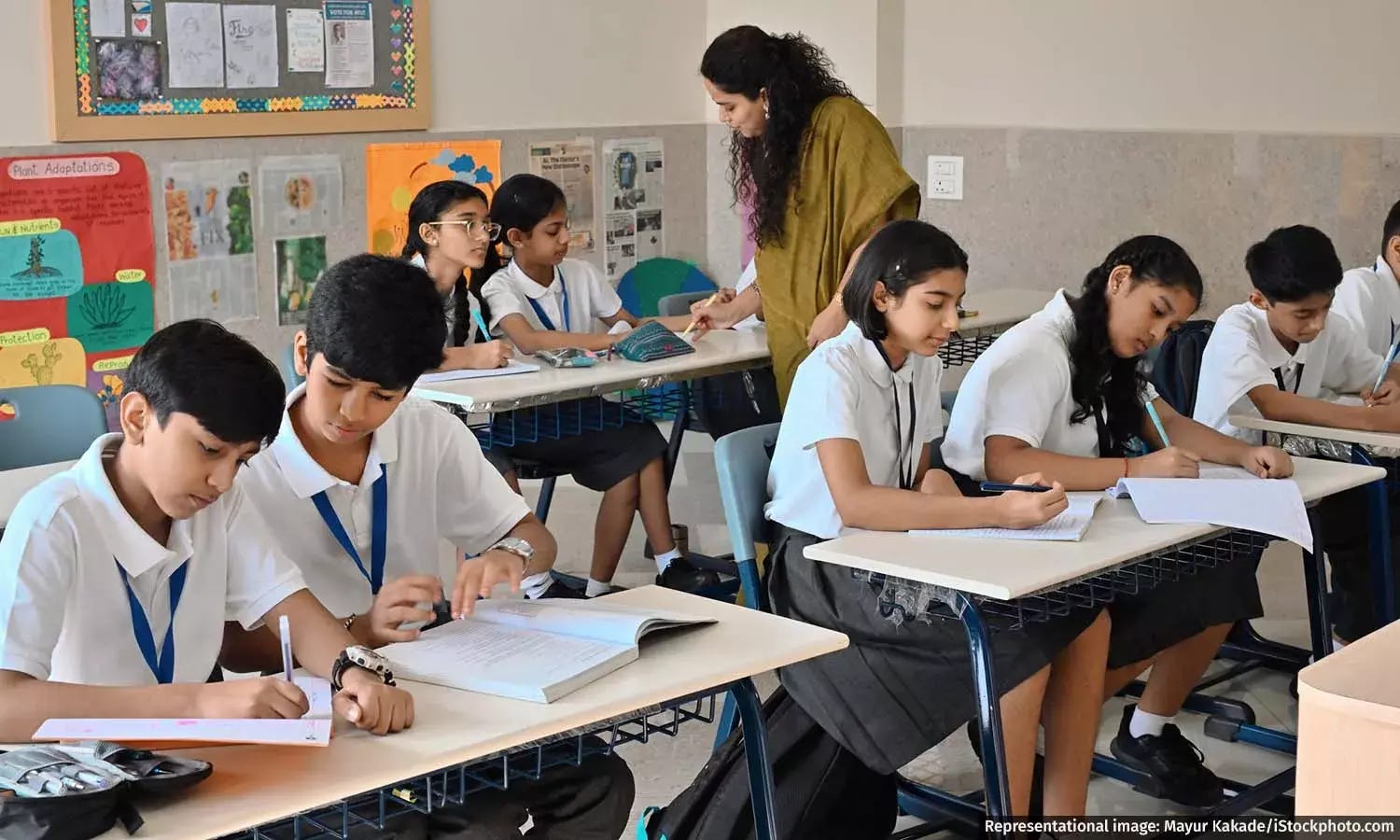
The Right To Education Act provides for free and compulsory elementary education (grades I to VIII) to each and every child. But that does not mean children are studying for free. A government survey of 52,085 households shows that parents are increasingly spending on coaching and private school. Even those whose children are studying in government schools spoke of associated costs such as books and stationery, transport and uniforms.
On top of tuition, nearly four in ten secondary students are enrolled in private coaching, with spending rising almost fourfold between primary and higher secondary level. Private school fees average ten times government school fees.
“Entry to higher education is now almost totally driven by entrance examinations,” says Kishore Darak, a senior educationist, “and the coaching industry is the gatekeeper.”
Taken together, families with school-going children spend between 5% and 10% of their monthly expenditure on education and related costs, our analysis shows. And marginalised communities spend a higher percentage of their incomes for a shot at the same opportunities. Vijay Jadhav reports in six charts.
We’ll be back next week with more stories.