

The Year That Was
This week, India’s public data landscape, the climate emergency, and the faceless ‘volunteers’ who count nearly everyone

Dear Reader
It’s become our ritual to look back at what the year revealed—not just about India’s challenges, but about how we track and understand them.
This year brought a familiar frustration: Important data either arrived late, changed methodology mid-stream, or simply stopped being published. We saw citizens take to the streets over environmental failures while policies moved in conflicting directions. One system quietly works in the face of several challenges—90% of India’s births now get registered, largely due to an army of faceless frontline workers.
These three stories capture different facets of 2025: the data we’re missing, the records we’re building, and the environmental contradictions we’re navigating. The thread connecting them: the gap between what’s promised and what’s delivered. Whether 2026 begins closing the gaps that remain depends on choices made in the coming months.
On behalf of everyone at IndiaSpend and all our contributors, I thank you for reading with us this year.
This holiday season, please consider making a donation to help us cover more ground. We’ll be watching, reporting, and holding the line on evidence-based journalism.
Programming note: Since this is a mid-week edition, our next newsletter will reach you on January 10.
New Data, Old Problems
Ten critical datasets were released in 2025 after several delays, including the Consumption Expenditure Survey, Sample Registration System outputs, and crime data for 2023.
But for some of these, the change in methodology was not accompanied by bridge surveys, making comparison with previous data untenable. The consumption survey, for instance, expanded item lists, used three separate questionnaires, and shifted from single to multiple visits.
Prachi Salve spoke to four experts—people who have worked to formulate, use and analyse public data—to understand the current state of data quality, periodicity and transparency, and what that means for the larger landscape of evidence-driven policymaking in India.

“The problem is not that methods have changed—that is inevitable—but that they keep changing in ways that break the ruler we use to measure trends, while the choices about what to publish look increasingly selective,” says Parakala Prabhakar, political economist and formerly a cabinet-ranked communications advisor in Andhra Pradesh.
Development economist Dipa Sinha says that while “definitions, questionnaires and sampling strategies have all changed,” there were no parallel surveys to link the old and new methods, leaving analysts able to report current consumption levels but unable to clearly assess how living standards have changed over time.
P.C. Mohanan, former acting chairperson of the National Statistical Commission gives the example of poverty estimates—analysts have used the new consumption data and applied the Tendulkar and Rangarajan poverty lines, which were at a lower level of expenditure. “So if you use this new data on the old poverty line, naturally your poverty estimates will go down drastically,” he explains.
Then there’s the census. Last conducted in 2011, with the next one scheduled for 2027, “all large surveys now rest on a sampling frame built on 2011 demographics,” says economist Arun Kumar, “even as age structures and rural-urban patterns have changed.” This “has direct consequences for welfare schemes, poverty lines and per-capita allocations,” Sinha explains.
Finally, there’s the issue of transparency. “Over the last decade, what has changed most is not just the numbers, but who decides what gets seen and when,” says Mohanan.
Read Prachi’s analysis here.
The Climate Emergency
This year, Delhi-NCR residents protested chronic air pollution in November. Some were detained. Students and activists in Hyderabad protested 400-acre forest clearing from March onward. The Supreme Court halted tree-felling. In Nashik, residents organized Chipko-style protests against felling 1,700 trees.
All this while, India’s policy actions remained contradictory.

The government introduced progressive policies such as the Environment Audit Rules and mandatory Greenhouse Gases Emissions Intensity Targets to align with global climate goals. But it simultaneously faced sharp criticism for the Van (Sanrakshan Evam Samvardhan) Amendment Rules. Critics argue this forest amendment will reduce transparency and facilitate net forest loss by allowing “offline” approvals for strategic projects and relaxing compensatory afforestation requirements.
Ultimately, the year 2025 reflected a widening tension between India’s development ambitions and the urgent need to mitigate the escalating impacts of the climate crisis. This, at a time when India experienced extreme weather on 99% of days in the first nine months of 2025—heat and cold waves, lightning, storms, heavy rains, floods, landslides.
Tanvi Deshpande tracks the year’s environmental protests and policy shifts.
Counting India
Several Indian states are going through a counting exercise—the revision of electoral rolls—which is leading to exclusion and disenfranchisement. Come 2027, and the Census will aim to count every individual living in the country. But on a daily basis, India’s frontline health workers take on the challenge of counting every child born here.
“I know ASHAs who have walked through snake-infested fields in the rains to visit women who gave birth in hospitals just to make sure that the newborn has a birth certificate,” says Suvarna Kamble, an accredited social health activist (ASHA) in Palghar, Maharashtra. ASHAs are paid an honorarium that is barely sufficient to help meet ends.
More than 90% of births and deaths are now registered. That still leaves 2.8 million births—Bhopal’s population—and one million deaths unregistered each year. There are regional variations: Sikkim had the lowest birth registrations in 2023, at 64%.
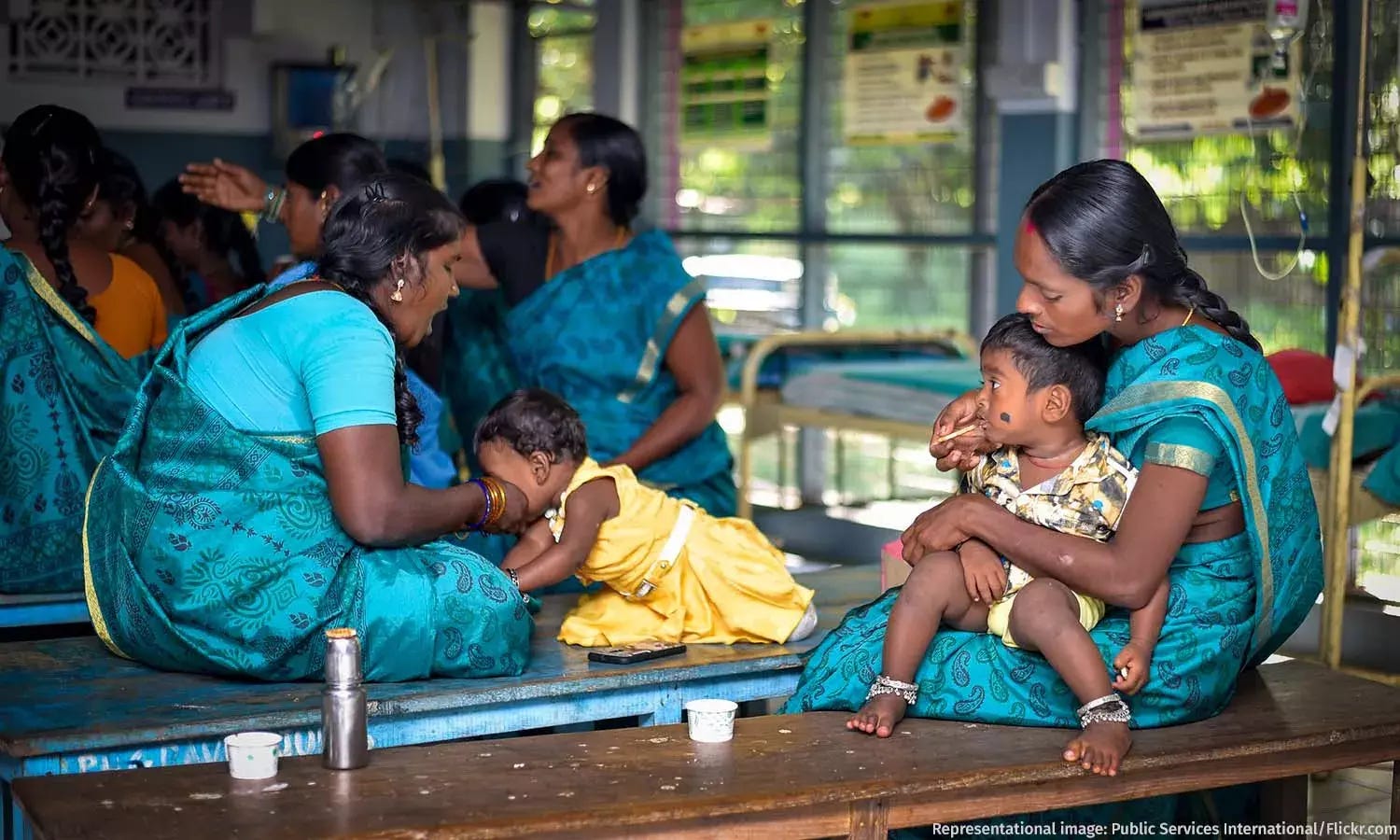
ASHAs, auxiliary nurse midwives, and health assistants do this work. They fill Civil Registration System forms, spelling parents’ names exactly as they appear in Aadhaar. “If it is not, the certificate is not issued,” Kamble says.
Birth certificates unlock school admission, Aadhaar cards, passports, government schemes.
But workers face resistance. “New mothers and infants are entitled to benefits that we are willing to take to their doorstep. Yet, some people object to our frequent visits,” Kamble says. Families worry ASHAs will weigh the mother and infant and chide them over inadequate care.
Nushaiba Iqbal profiles the frontline workers behind 90% registration—and why 10% still slip through.
Here’s wishing you a happy, healthy and fulfilling year ahead.