

War & Oil (Not That Oil)
This week, India’s ambitions to nearly double its oilseeds production as imports get costlier, and an analysis of national data on crime against children

Dear Reader
Last week, we looked at India’s fertiliser scenario, and the potential ramifications of a shortage from supply chain disruptions due to the war in West Asia. This week, we turn to edible oils, prices of which are already high as Food Price Watch, our tracker of what a healthy diet costs in India, has been showing for weeks.
Since 2025, Prime Minister Narendra Modi has appealed to his fellow citizens to reduce the consumption of edible oils by 10%, first for health reasons, and last month, with the added objective to conserve crucial foreign exchange reserves.
But household surveys suggest that the average Indian is consuming just about the recommended amount of oil. The other part of the consumption story is industrial—think soaps and cosmetics, biofuels, lubricants & greases, paints & coatings.
India meets only 44% of its demand for edible oil. In 2024, the government launched the National Mission on Edible Oils, to increase oilseeds production 79% by the end of the decade. But that is not as simple as it sounds, we report.
Elsewhere, we analysed national crime data released recently for the year 2024, and found that cases of crime against children are at a decadal high, chargesheeting rate is low, and pendency in courts persists.
The impending oil crisis in your kitchen
Packaged sunflower oil prices across India are up 15% year-on-year, mustard oil up 12%, palm and soya up 9% each. India farms 15-20% of the world’s oilseed acreage but produces just 6-7% of its vegetable oil. It then imports $20 billion worth a year to make up the gap.
The government launched a mission two years ago to boost domestic oilseed production by nearly 80% by 2031, but experts say the numbers don’t add up without solving deeper problems: inputs don’t reach small farmers, procurement centres are absent in remote areas, and prices fell below MSP in 2023 with no government intervention.
As a result, farmers tend to allocate better land, irrigation, and inputs to cereals and cash crops, and “oilseeds are often cultivated in residual moisture conditions, on relatively poor soils and in less-favoured production regions,” explained Ravi Mathur, director of the ICAR-Indian Institute of Oilseeds Research. Consequently, India’s productivity is lower than other countries.
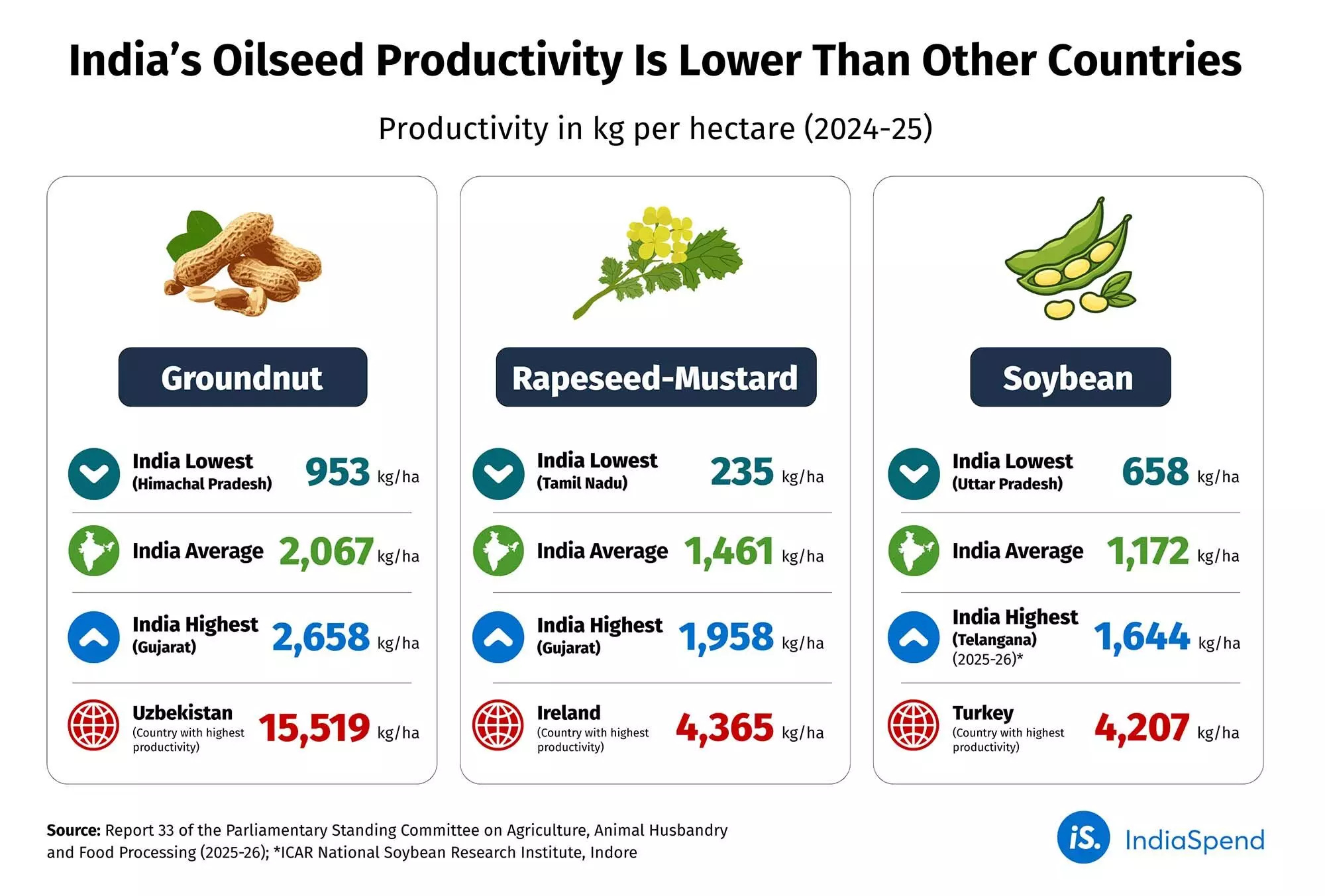
With price volatility and inadequate post-harvest infrastructure leading to distress sales and losses of up to 10% for oilseeds, beyond support prices, instituting ways to add value to farm produce can play a key role in incentivising farmers to adopt these crops.
Charu Bahri reports on what it will actually take to close India’s edible oil gap.
In 6 Charts: Crime Against Children In India
In 2024, India recorded, on average, one case of crime against children every three minutes. Most cases were related to ‘kidnapping and abduction’ or under the Prevention of Children from Sexual Offences (POCSO) Act.
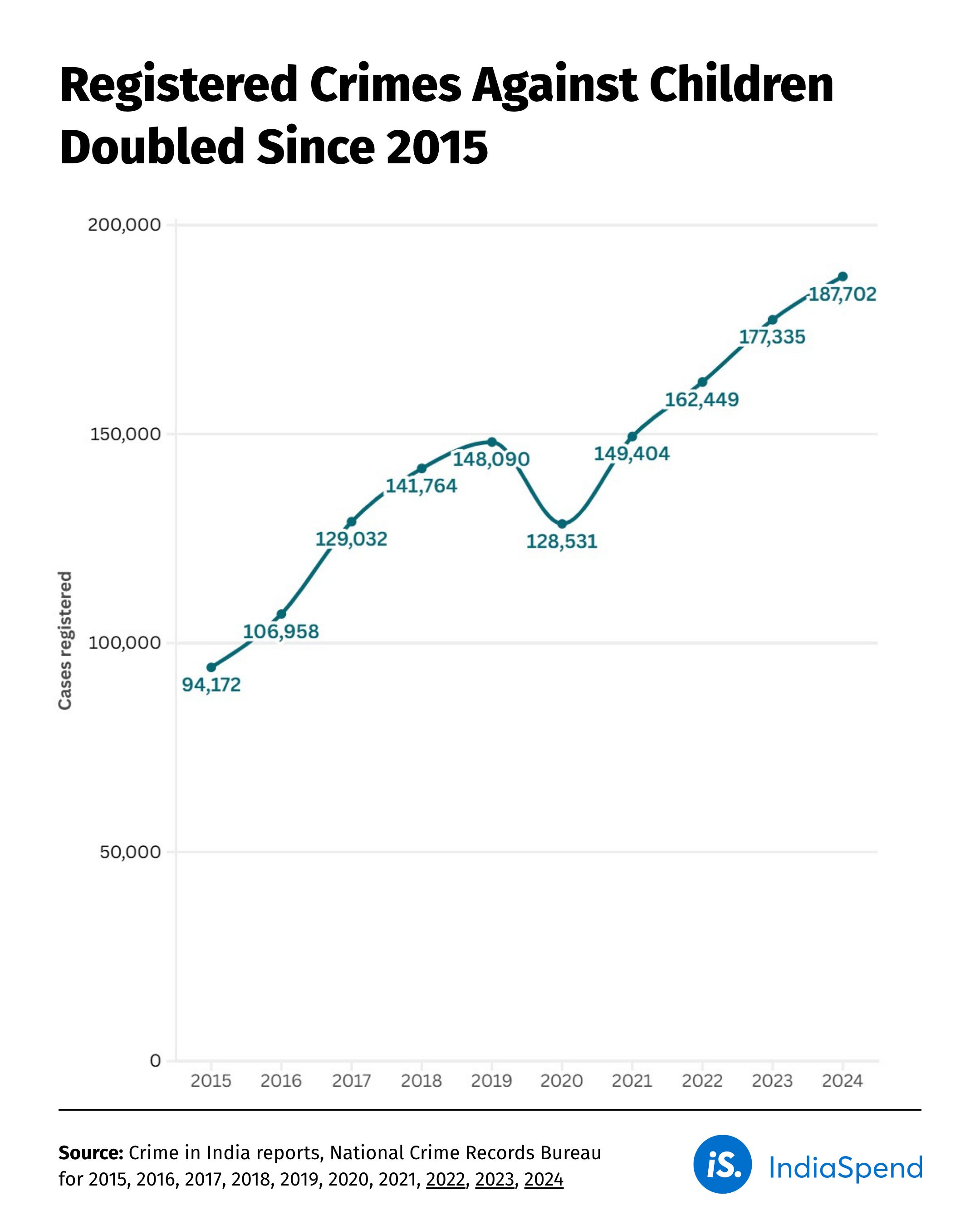
India’s National Crime Records Bureau collates data on crime, accidental deaths and suicides from all states and Union territories. The latest data, for 2024, were released last month. Our analysis for the last decade shows some patterns that persist.
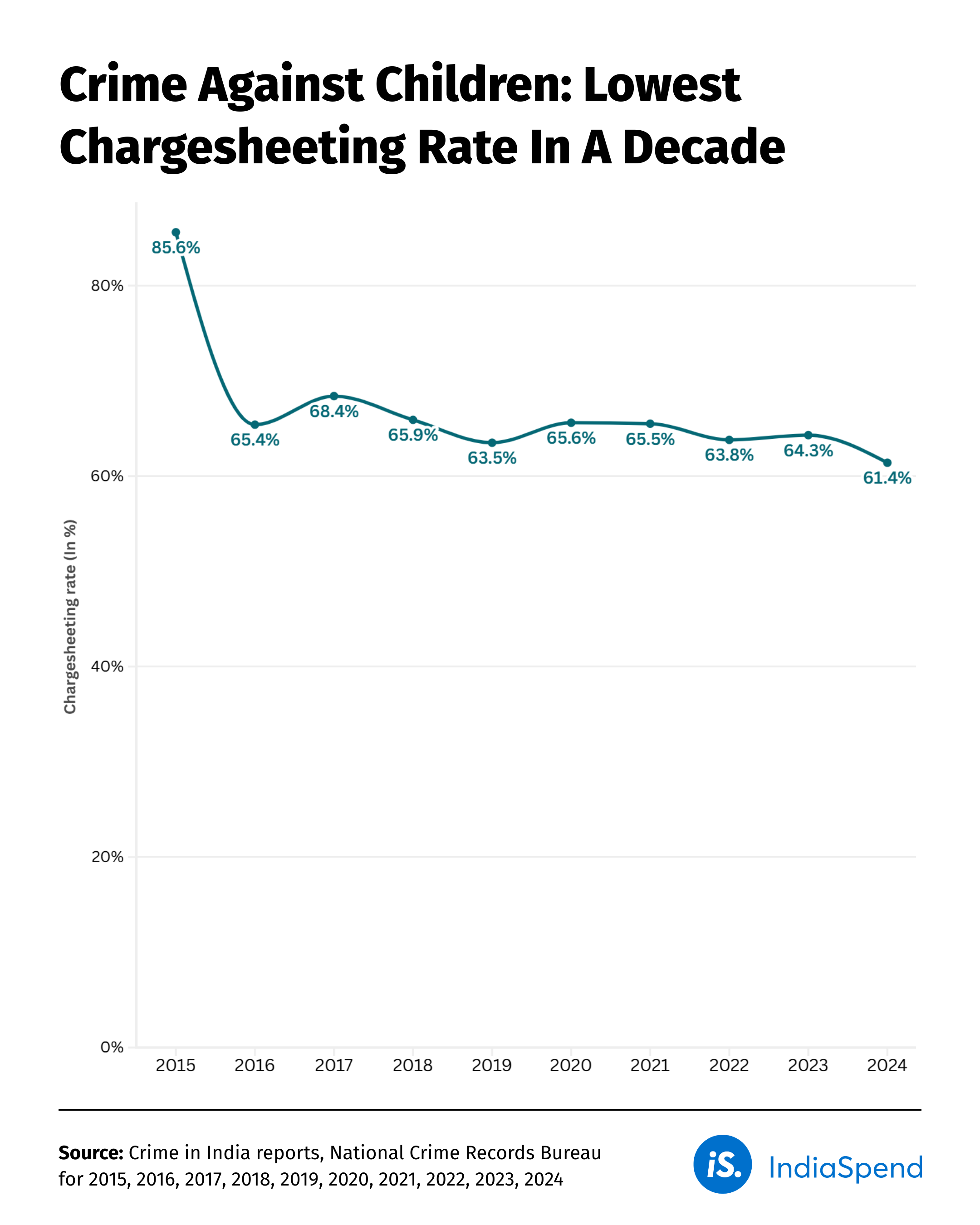
Chargesheeting rate is falling:
Each year over the last decade, police have filed chargesheets in about half the cases registered during the year.
In 2024, the police disposed of 181,446 cases of which 111,426 ended in chargesheets against the accused, a rate of 61.4%. This was the lowest rate in the last decade.
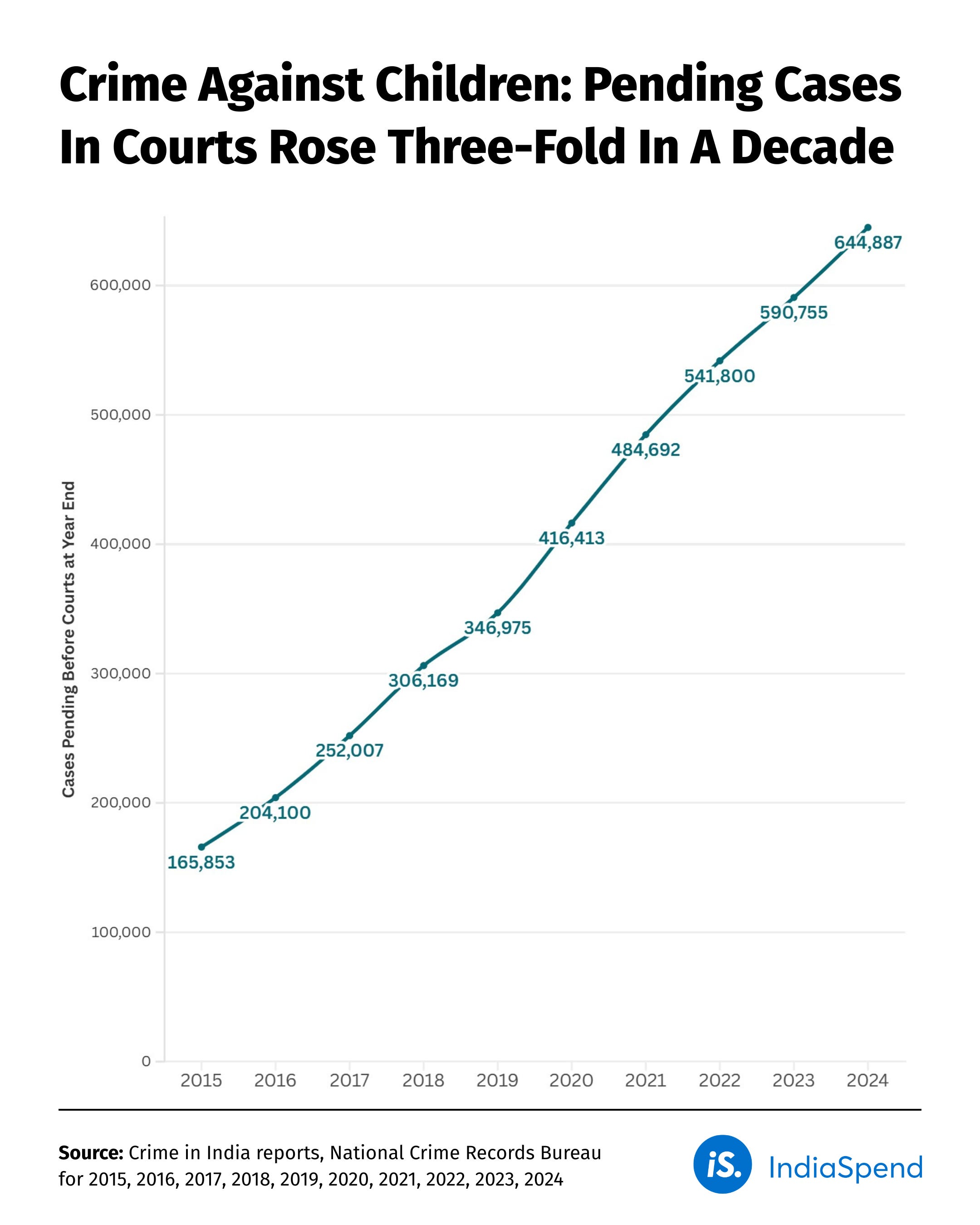
Pendency in courts is rising:
Nine in 10 cases up for trial remained pending at the end of the year. Overall, cases pending before courts have risen from 165,853 in 2015 to 644,887 in 2024, nearly three-fold increase in a decade.
A caveat when working with crime data is that a rise in cases does not necessarily mean a rise in crime. It could be due to multiple factors including more reporting and easier registration.
Read Vijay Jadhav’s analysis here.
That’s all for this week. We’ll be back next week with more stories.