

When It Rains, It Pours. But When It Doesn’t?
This week, what a below-normal monsoon and an intense El Niño mean for India, and why India’s fertiliser use remains high

Dear Reader
Indians are eagerly awaiting the arrival of the monsoon. This summer has been deadly, quite literally for hundreds of people, and several parts of the country continue to reel under heatwave conditions. In this context, the India Meteorological Department (IMD) has released an updated forecast for the monsoon, and it is not good news.
The IMD projects that India will see a below-normal to deficient monsoon, with rainfall totals estimated to be 90% of the long-period average with a 4% margin of error. But even this hides spatial variations. Some regions may see much lower rainfall, and—as our experience over the past few years has increasingly shown—the season could see long dry spells accompanied by a few days of extreme rainfall events.
And, that’s not all. An intense El Niño could further derail the monsoons, and lead to increased temperatures in parts of the country. In an economy that is beginning to see the impact of the war in West Asia, this could lead to further distress—more than half of India’s area under cultivation is rain-fed. In an interview, we explain what this means for India, and how we can prepare for it.
Further, in the face of fertiliser shortages due to the war, we examine what a shift to natural farming can look like, and where policy is falling short.
Bleak monsoon
Changing climate has made monsoons increasingly erratic. In some years, overall rainfall for India as a whole has been stable, but wide variations have come to be the new normal. Many parts receive a large chunk of annual rainfall over a fortnight, a phenomenon that disrupts crops, tests urban drainage systems and resilience, and does little to recharge depleting groundwater levels.
This year, the complication of what is being called a ‘Super El Niño’ or ‘El Niño Godzilla’ imperils the monsoon. El Niño is a powerful atmospheric-ocean phenomenon. The National Oceanic and Atmospheric Administration describes the phenomenon as follows:
“During normal conditions in the Pacific ocean, trade winds blow west along the equator, taking warm water from South America towards Asia. To replace that warm water, cold water rises from the depths…. During El Niño, trade winds weaken. Warm water is pushed back east, toward the west coast of the Americas.”
This causes wide disruptions—from increased rainfall and flooding in regions such as South America, East Africa, and the southern United States; to drought conditions in eastern and northern Australia, Indonesia, southern Africa, and parts of South Asia due to suppressed monsoon activity.
The war in West Asia is expected to further hit fertiliser supply. Combine that with a weak monsoon and increased fuel prices, and it is a perfect storm for India’s agriculture, and consequently, food production and prices.
But models are notoriously bad at predicting the amplitudes very well, explained Raghu Murtugudde, an earth systems scientist, Emeritus Professor at the University of Maryland, and visiting faculty at the Kotak School for Sustainability at Indian Institute of Technology (IIT), Kanpur.
In an interview, Tanvi Deshpande spoke with Murtugudde on what the science says so far about this year’s El Niño and what steps India could take to better prepare for its impacts. Read the full interview here.
‘Policy Changes, Not Prayers’
In his Independence Day speech in 2019, Prime Minister Narendra Modi called on farmers to reduce the use of chemical fertilisers by 10-25%. He repeated this appeal six years later, again from the ramparts of the Red Fort on Independence Day. Most recently, earlier this month, he called for a 25-50% reduction in fertiliser use.
But appeals without accompanying policy moves achieve precious little, experts say. During this time, India’s fertiliser consumption as a whole has risen 15%. Reducing the use of chemical fertilisers in soil that is habituated to their use causes a significant drop in yield. And if farmers are not protected from the yield drop, their already fragile incomes can dwindle further, leading to widespread distress.
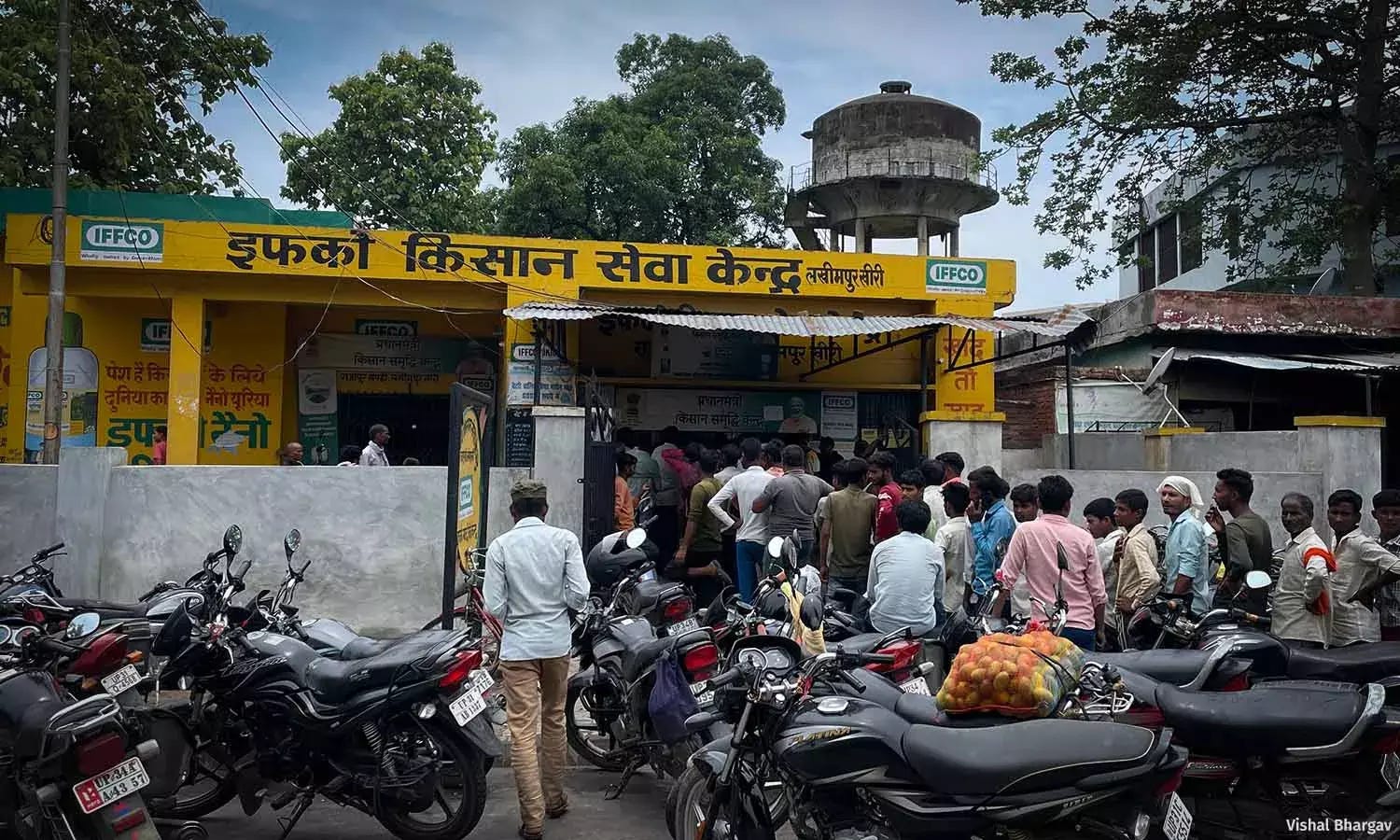
A Union government-sponsored scheme launched in November 2024 to promote natural farming has so far covered 880,000 hectares, which is less than 1% of India’s cultivated land.
“To scale natural farming, we need policy changes, not prayers,” Avinash Kishore, senior research fellow in the Development Strategies and Governance Unit, International Food Policy Research Institute (IFPRI), told IndiaSpend.
If in 2010 a farmer had to sell 27 kg of rice at the prevailing minimum support price to buy 50 kg of urea; today a farmer could buy it for only 12 kg of rice, pointed out Kishore. “At such low prices, it simply doesn’t make economic sense for farmers to use urea judiciously or consider the alternative, natural farming, which involves much more hard work.”
The government should promote small scale rural enterprises to manufacture the inputs needed for natural farming, make alternative nutrient solutions at scale, and provide subsidies at least on par with chemical fertiliser to cover their costs and losses when they first make the switch, says G.V. Ramanjaneyulu, executive director, Centre for Sustainable Agriculture.
The Indian Council of Agricultural Research has identified potential domains for a transition to natural farming—balancing sustainability and national food security—to cover 25.8% of India’s net cultivated area. But scaling up from 1% area is impossible without policy change, Charu Bahri reports.
That’s all for this week. We’ll be back in your inbox next week with more stories.